
Dan Gurney, Colin Chapman and Jim Clark at the Lotus Ford Indy Test, February, 1963
THF110625 / Dan Gurney, Colin Chapman and Jim Clark at the Lotus Ford Indy Test, February, 1963
01
Artifact Overview
Drivers Dan Gurney (left) and Jim Clark (right) combined forces with designer Colin Chapman (center) to revolutionize the Indianapolis 500. Front-engine roadsters still dominated the race in the early 1960s, but Gurney believed a rear-engine Formula One style car could win. Gurney brought Chapman together with Ford, and Clark won the 1965 Indy 500 in a Ford-powered, Chapman-designed rear-engine car.
Artifact Details
Artifact
Photographic print
Subject Date
February 1963
Creators
Collection Title
Location
By Request in the Benson Ford Research Center
Object ID
2009.158.66
Credit
From the Collections of The Henry Ford.
Material
Paper (Fiber product)
Technique
Gelatin silver process
Color
Black-and-white (Colors)
Dimensions
Height: 8 in
Width: 10 in
Inscriptions
printed label with handwriting in categories adhered to back of image:
Must Credit / The Dave Friedman Photo Collection / [address]
Driver: GURNEY, CHAPMAN, CLARK / Machine: LOTUS FORD / Date and event: INDY TEST 2-63 / This photograph is the copyright of Dave Friedman and must / not be reproduced without the expressed consent of the / photographer.
handwritten on lower right corner:
132555-444
Keywords |
|---|
02
Related Content
 popular research topic
What If a Single Car Could Change the Greatest Spectacle in Racing?
Blending racing talent with diplomacy, he united a British sports car builder and Ford Motor Company to transform the Indianapolis 500.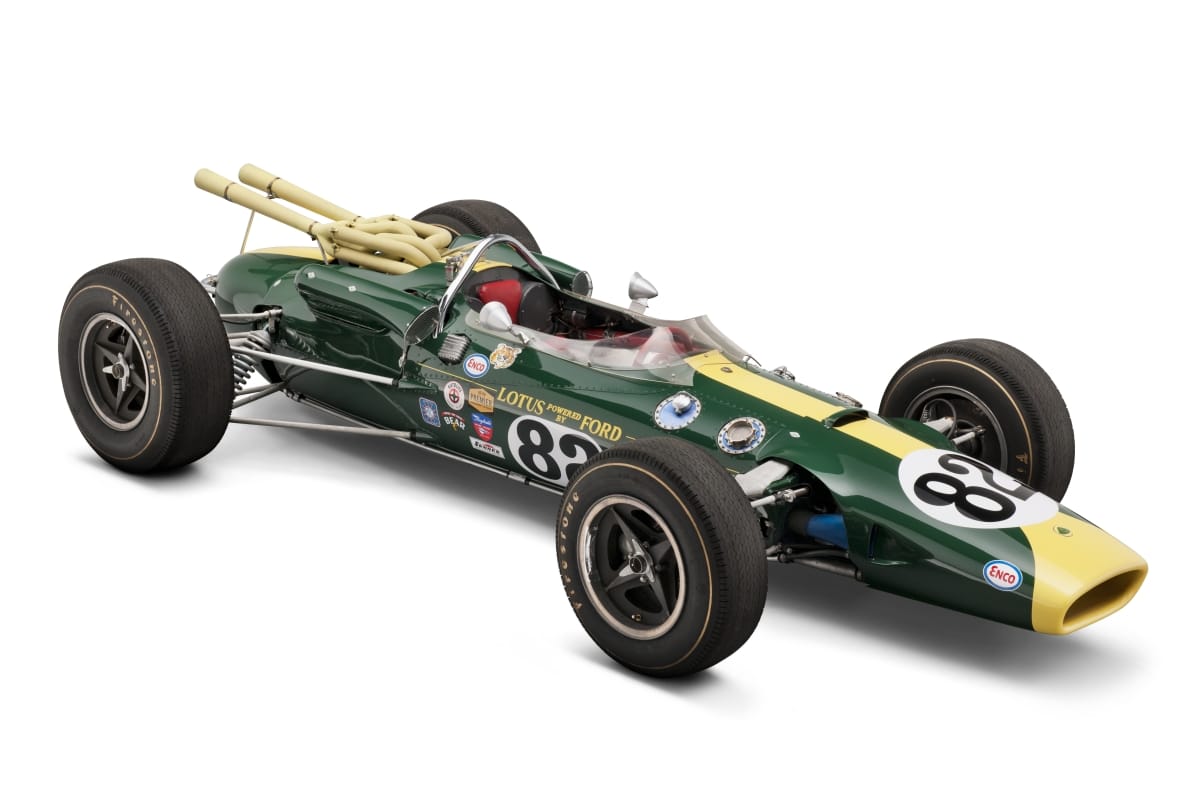 Set
SetJim Clark and the 1965 Indianapolis 500
- 21 Artifacts
Scotsman Jim Clark won the Indianapolis 500 with this rear-engine car in 1965. After his victory, a traditional front-engine car never won that race again. The Lotus-Ford combined a European Formula One-inspired lightweight chassis with a big Ford V-8 engine. The Lotus-Ford's success effectively killed the traditional Indy roadster and established a new design for American race cars. Set
SetIndianapolis 500 Materials at The Henry Ford
- 25 Artifacts
When Carl Fisher and his partners opened Indianapolis Motor Speedway in 1909, the crushed stone and tar track surface quickly proved too dangerous. Fisher had the entire track resurfaced with 3.2 million paving bricks. The track was fully paved with asphalt by 1961, but a three-foot brick strip -- at the start/finish line -- remains, as does the speedway's nickname: the Brickyard.