
Search
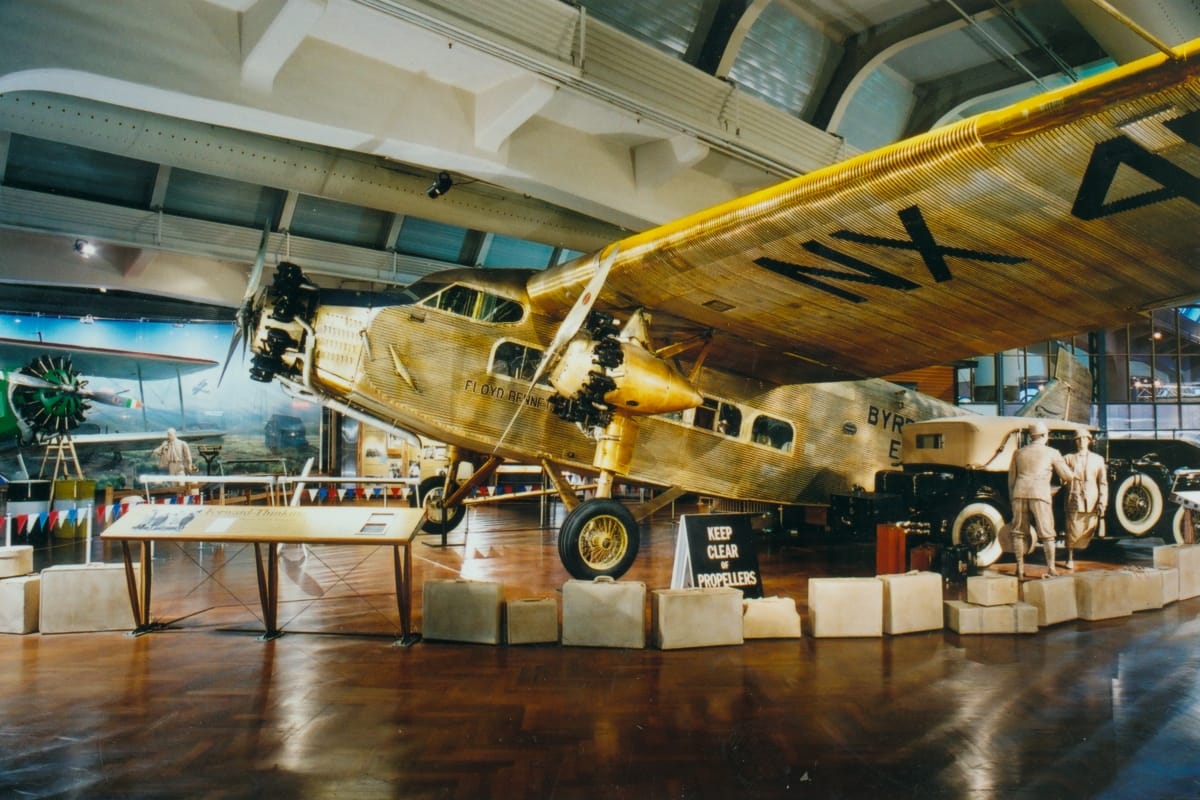
- Ford Tri-Motor - The Ford Tri-Motor was the most popular airliner of the late 1920s and early 1930s. Its rugged dependability led Richard Byrd to choose a Tri-Motor for his attempt to be the first person to fly over the South Pole. On November 28-29, 1929, Byrd and a crew of three achieved that goal in this plane.
- February 12, 2016
- Collections - Set
Ford Tri-Motor
The Ford Tri-Motor was the most popular airliner of the late 1920s and early 1930s. Its rugged dependability led Richard Byrd to choose a Tri-Motor for his attempt to be the first person to fly over the South Pole. On November 28-29, 1929, Byrd and a crew of three achieved that goal in this plane.
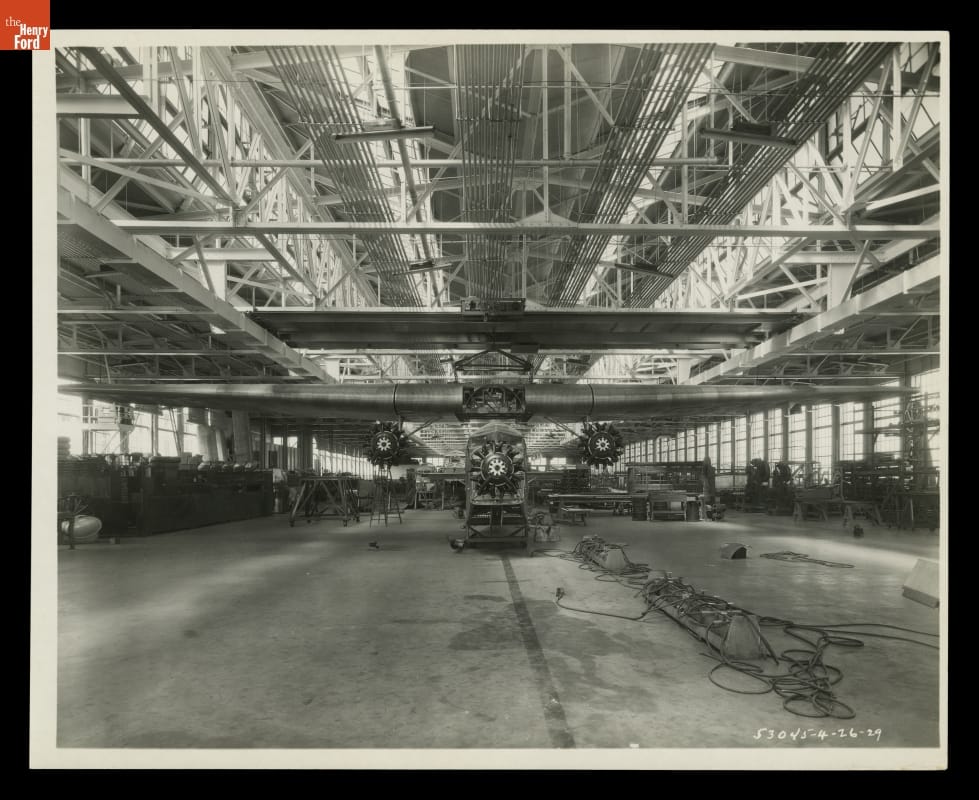
- Ford Tri-Motor: Production - Henry Ford attempted to apply automobile assembly line techniques to the manufacture of airplanes, and to build them in large numbers. Monthly production peaked at 25 planes in June 1929. The Great Depression forced Ford to re-focus on his core auto business, and the company's commercial aircraft production ended in May 1933.
- September 05, 2017
- Collections - Set
Ford Tri-Motor: Production
Henry Ford attempted to apply automobile assembly line techniques to the manufacture of airplanes, and to build them in large numbers. Monthly production peaked at 25 planes in June 1929. The Great Depression forced Ford to re-focus on his core auto business, and the company's commercial aircraft production ended in May 1933.
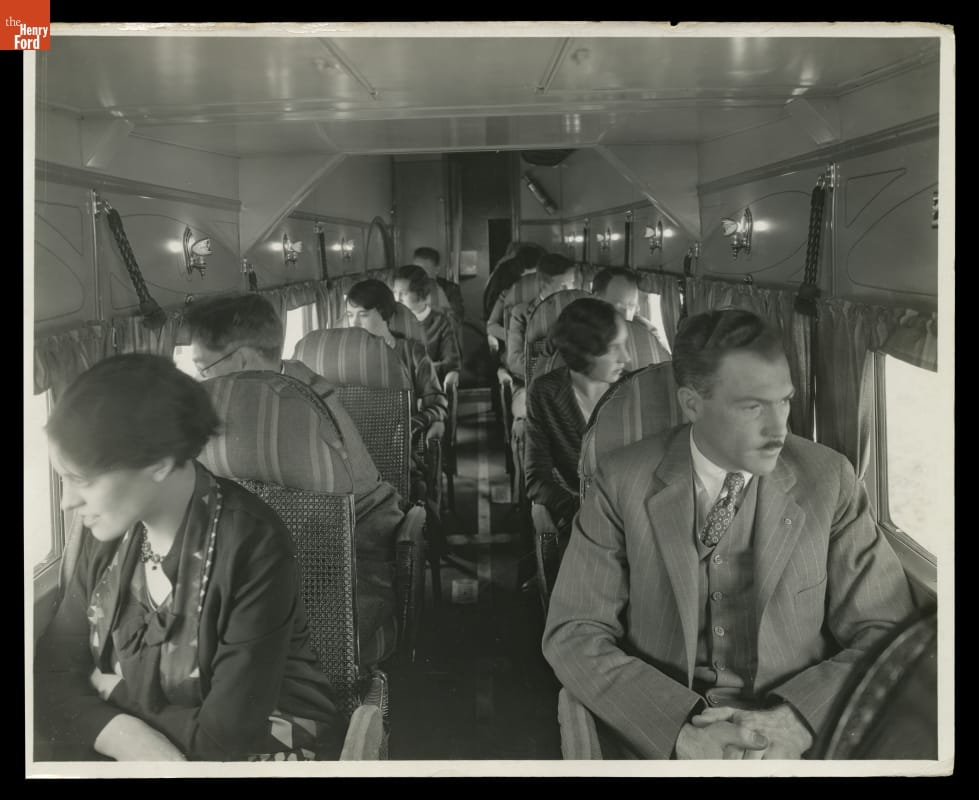
- Passengers aboard Ford Tri-Motor Airplane, 1929 - Americans initially wondered if air travel was safe. Fatal crashes by barnstorming pilots were well publicized, and wood and cloth airplanes did not inspire confidence. But when Henry Ford began making planes, the industrialist's solid reputation eased people's fears. Ford's all-metal Tri-Motors were rugged, dependable and safe. By the late 1920s these planes were the backbone of the budding airline industry.
- April 30, 1929
- Collections - Artifact
Passengers aboard Ford Tri-Motor Airplane, 1929
Americans initially wondered if air travel was safe. Fatal crashes by barnstorming pilots were well publicized, and wood and cloth airplanes did not inspire confidence. But when Henry Ford began making planes, the industrialist's solid reputation eased people's fears. Ford's all-metal Tri-Motors were rugged, dependable and safe. By the late 1920s these planes were the backbone of the budding airline industry.
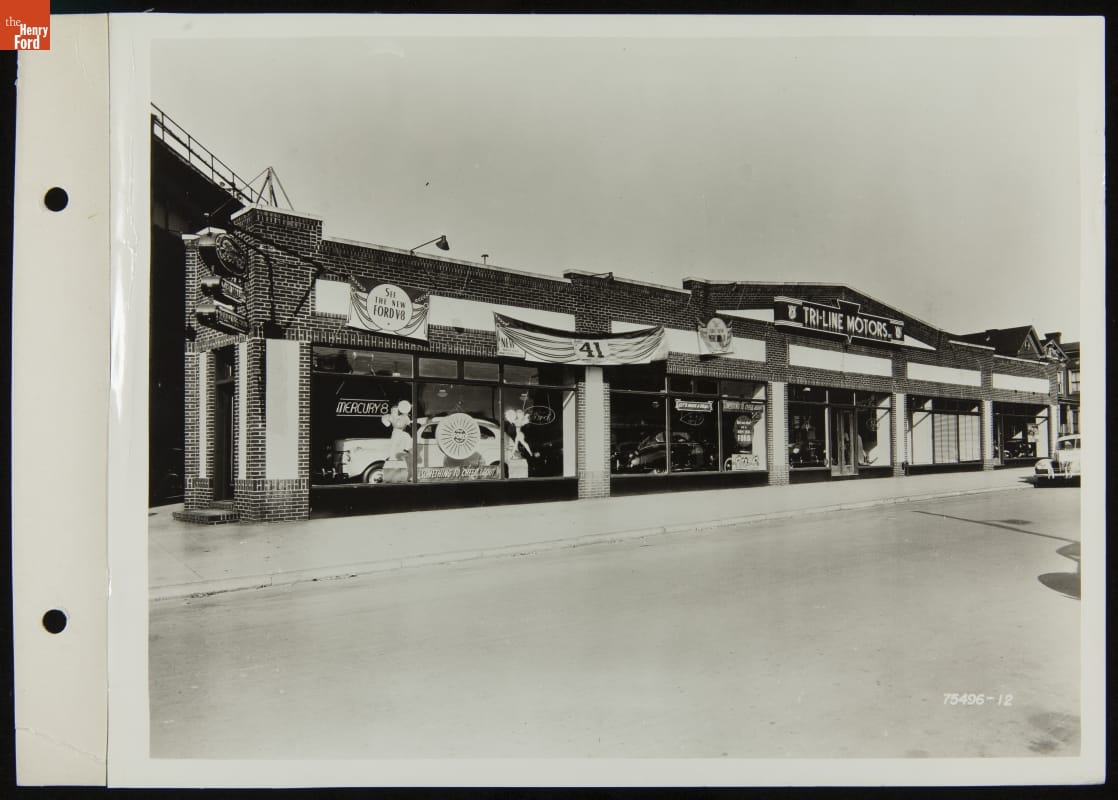
- Tri-Line Motors Ford Dealership, April 1941 - Ford Motor Company inaugurated a system of competing dealership franchises in 1914. Dealers sold Ford vehicles, offered repair services, and stocked spare parts and accessories. The 1930s and early 1940s were challenging times as dealers first struggled through the Great Depression and then found themselves with no new cars during World War II when automakers focused exclusively on military production.
- April 25, 1941
- Collections - Artifact
Tri-Line Motors Ford Dealership, April 1941
Ford Motor Company inaugurated a system of competing dealership franchises in 1914. Dealers sold Ford vehicles, offered repair services, and stocked spare parts and accessories. The 1930s and early 1940s were challenging times as dealers first struggled through the Great Depression and then found themselves with no new cars during World War II when automakers focused exclusively on military production.
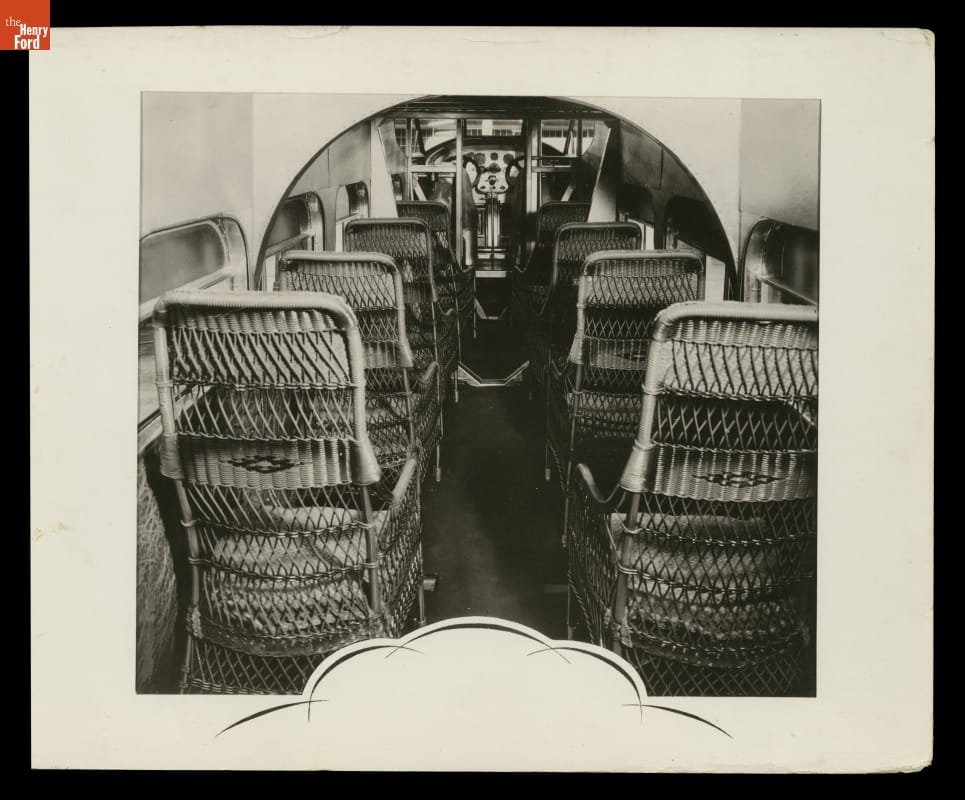
- Interior of Ford Tri-Motor Airplane, 1928 - The interior of a Ford Tri-Motor airplane is seen in this 1928 view. Lightweight wicker seats were provided for passengers. The less the airplane itself weighed, the more passengers or cargo it could carry.
- July 13, 1928
- Collections - Artifact
Interior of Ford Tri-Motor Airplane, 1928
The interior of a Ford Tri-Motor airplane is seen in this 1928 view. Lightweight wicker seats were provided for passengers. The less the airplane itself weighed, the more passengers or cargo it could carry.
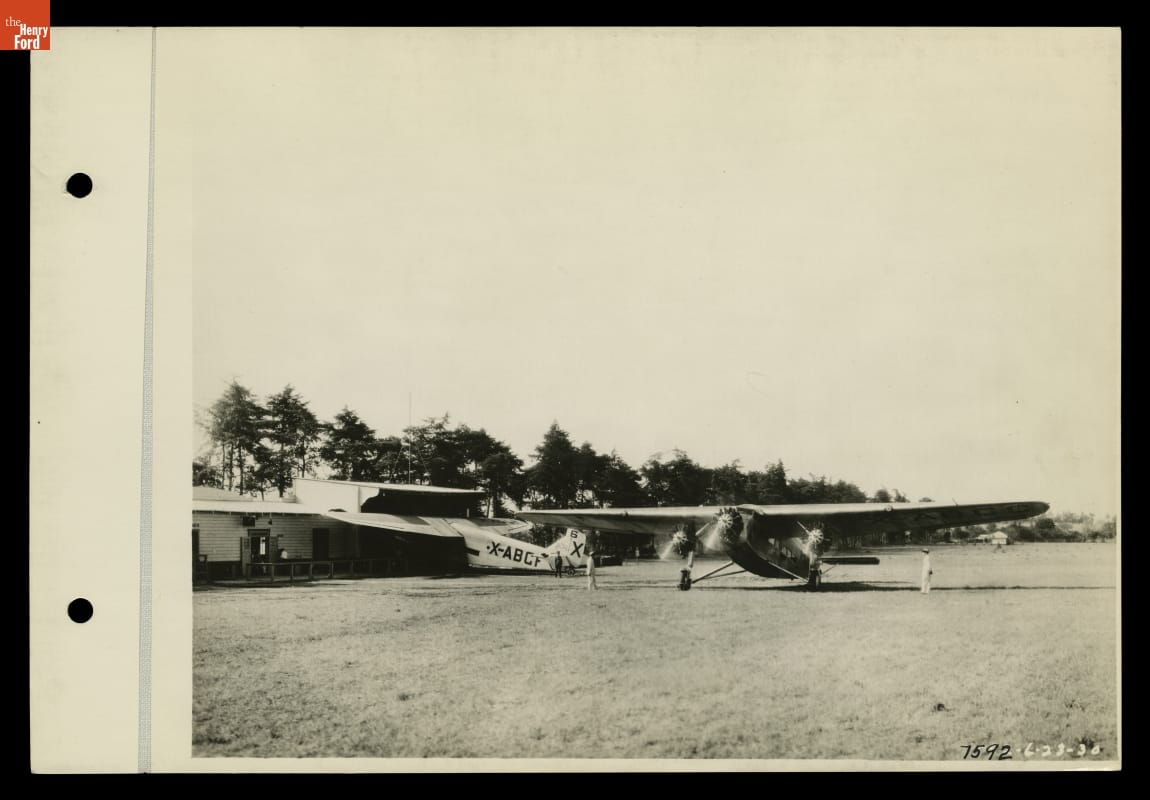
- Ford Tri-Motor Airplanes at Airport, 1930 - The rugged Ford Tri-Motor did not require a paved runway for takeoff or landing -- a good thing considering that grass airfields were common in the United States, even in major cities, until World War II. The Tri-Motor's flexibility helped make it one of the most successful early commercial airliners.
- June 23, 1930
- Collections - Artifact
Ford Tri-Motor Airplanes at Airport, 1930
The rugged Ford Tri-Motor did not require a paved runway for takeoff or landing -- a good thing considering that grass airfields were common in the United States, even in major cities, until World War II. The Tri-Motor's flexibility helped make it one of the most successful early commercial airliners.
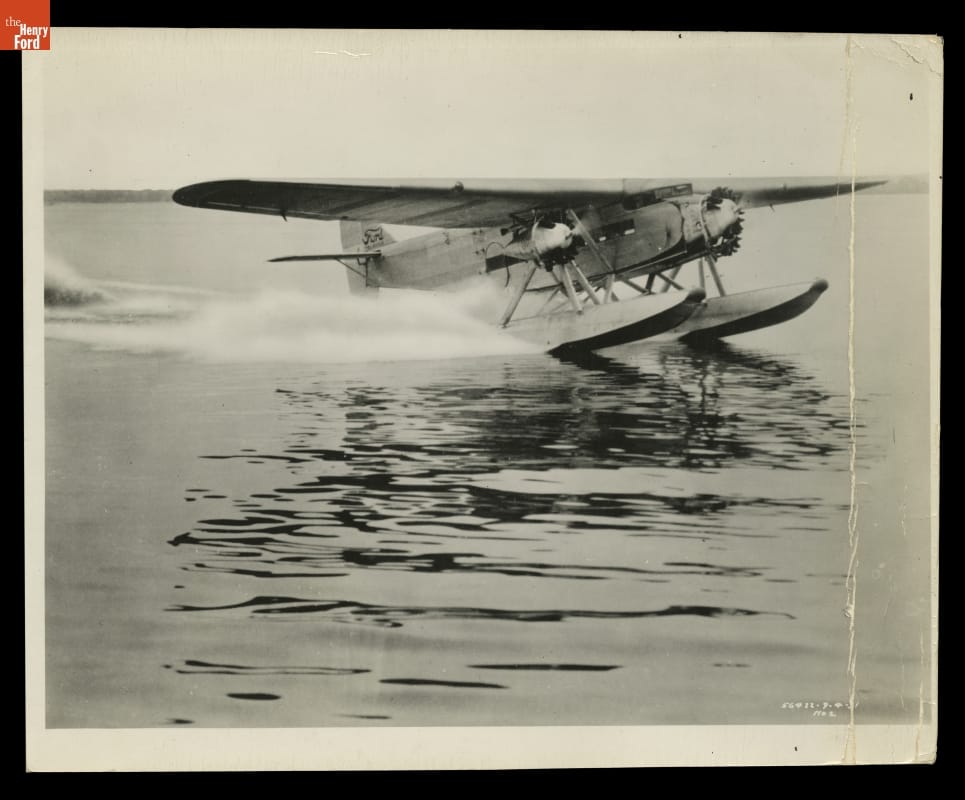
- Ford Tri-Motor Airplane Equipped with Pontoons, 1931 - The Ford Tri-Motor's versatility was a big part of its success. By mounting a set of pontoon floats on the airplane's landing gear, any sufficiently large body of water became a runway. This modification was especially useful in places where landing strips -- paved or not -- were few and far between.
- September 04, 1931
- Collections - Artifact
Ford Tri-Motor Airplane Equipped with Pontoons, 1931
The Ford Tri-Motor's versatility was a big part of its success. By mounting a set of pontoon floats on the airplane's landing gear, any sufficiently large body of water became a runway. This modification was especially useful in places where landing strips -- paved or not -- were few and far between.
- Inspiring the Ford Tri-Motor - From millions of artifacts in The Henry Ford’s collections, our experts choose three and reveal the surprisingly curious connections between them. In the featured video below, discover how aircraft manufacturers from the Netherlands and Germany influenced an airplane from an American automaker.

- February 22, 2017
- Collections - Video
Inspiring the Ford Tri-Motor
From millions of artifacts in The Henry Ford’s collections, our experts choose three and reveal the surprisingly curious connections between them. In the featured video below, discover how aircraft manufacturers from the Netherlands and Germany influenced an airplane from an American automaker.
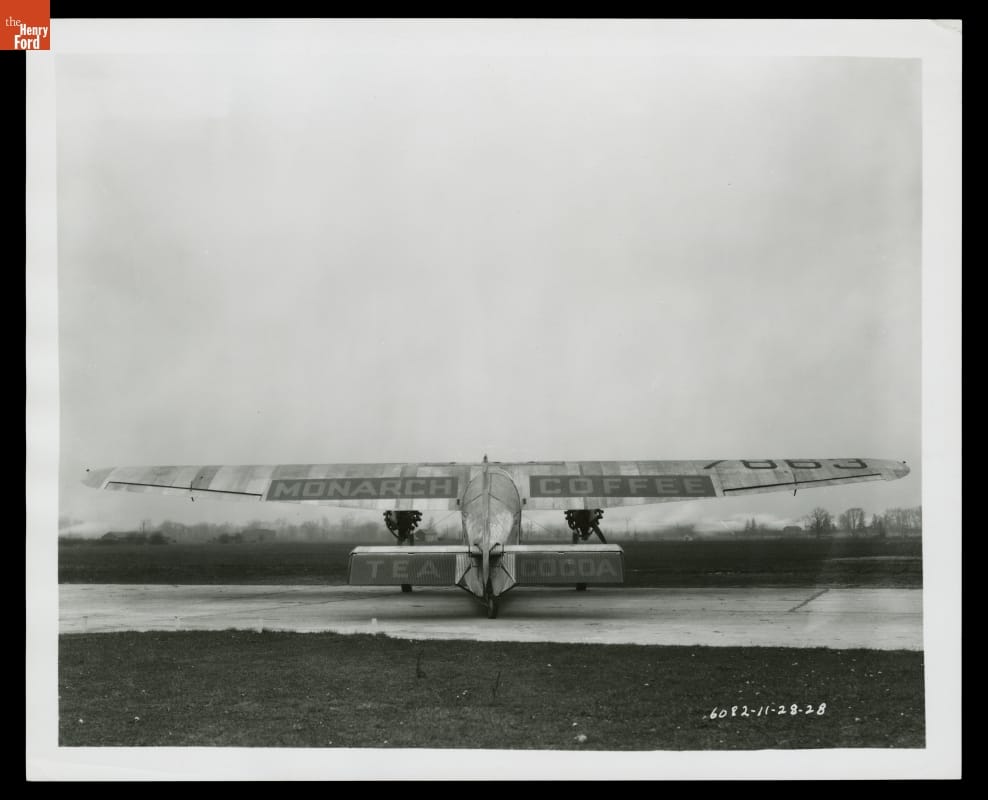
- Ford Tri-Motor: Promotional Use - From 1928 to 1931, Reid, Murdoch & Company of Chicago used a Ford Tri-Motor to advertise its Monarch Foods brand. Named <em>Independence</em>, the modified plane served as a flying salesroom and carried samples of over 200 different food products to airports throughout the country. On occasion, Monarch's pint-sized advertising characters, "The Teenie Weenies," also accompanied the plane on its stops.
- September 05, 2017
- Collections - Set
Ford Tri-Motor: Promotional Use
From 1928 to 1931, Reid, Murdoch & Company of Chicago used a Ford Tri-Motor to advertise its Monarch Foods brand. Named Independence, the modified plane served as a flying salesroom and carried samples of over 200 different food products to airports throughout the country. On occasion, Monarch's pint-sized advertising characters, "The Teenie Weenies," also accompanied the plane on its stops.
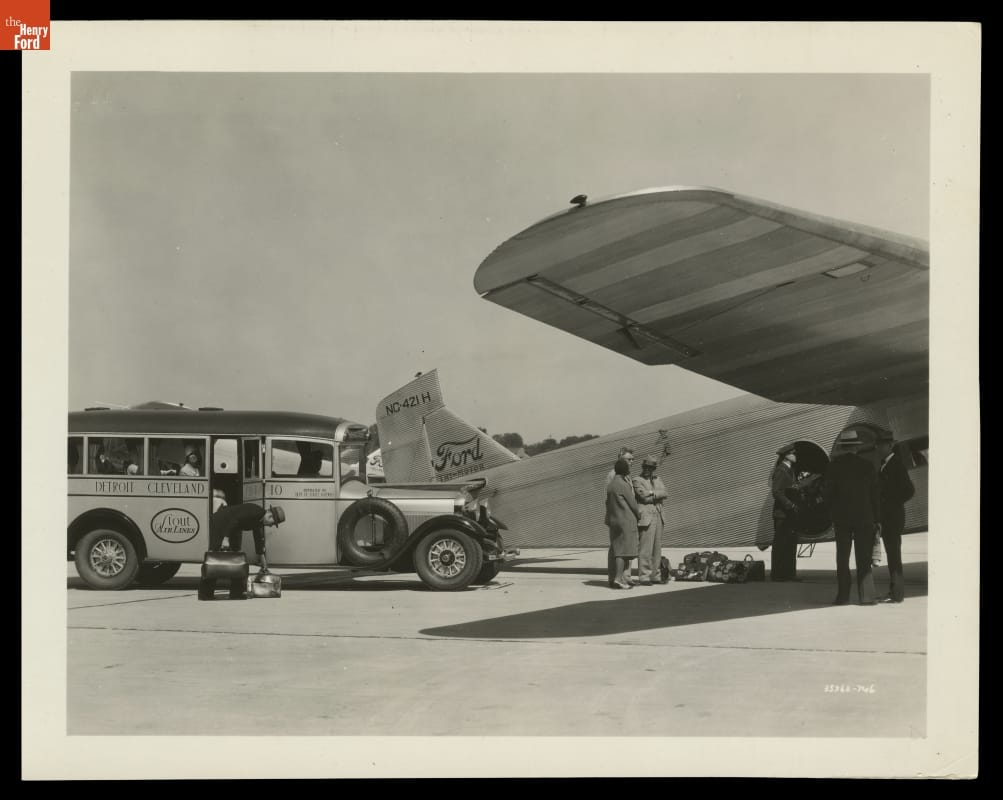
- Ford Tri-Motor: Passenger Travel - Stout Air Lines advertised direct airplane service between Detroit and Cleveland, but this wasn't strictly true. Stout's "Detroit" terminal was, in fact, Ford Airport in Dearborn, ten miles west of the city. Passengers gathered at a station in Detroit and were shuttled by bus to the Dearborn airport where they boarded the actual plane.
- September 05, 2017
- Collections - Set
Ford Tri-Motor: Passenger Travel
Stout Air Lines advertised direct airplane service between Detroit and Cleveland, but this wasn't strictly true. Stout's "Detroit" terminal was, in fact, Ford Airport in Dearborn, ten miles west of the city. Passengers gathered at a station in Detroit and were shuttled by bus to the Dearborn airport where they boarded the actual plane.