
Search
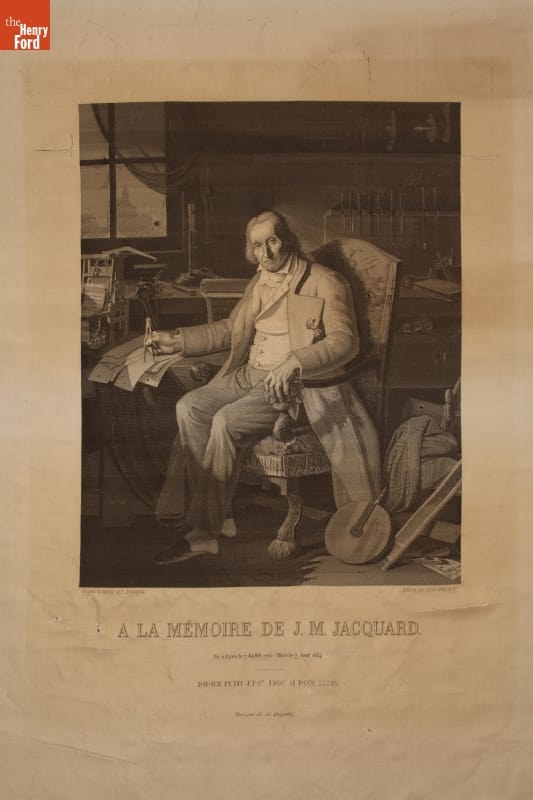
- Portrait of Joseph-Marie Jacquard, 1839 - This portrait of French inventor Joseph-Marie Jacquard (1752 - 1834) was woven of fine silk using the mechanism that he developed and patented in 1804. Jacquard's device employs punched cards to store the intricate pattern design and to control the loom. These loom cards eventually led to the data cards used in early digital computers.
- 1831
- Collections - Artifact
Portrait of Joseph-Marie Jacquard, 1839
This portrait of French inventor Joseph-Marie Jacquard (1752 - 1834) was woven of fine silk using the mechanism that he developed and patented in 1804. Jacquard's device employs punched cards to store the intricate pattern design and to control the loom. These loom cards eventually led to the data cards used in early digital computers.
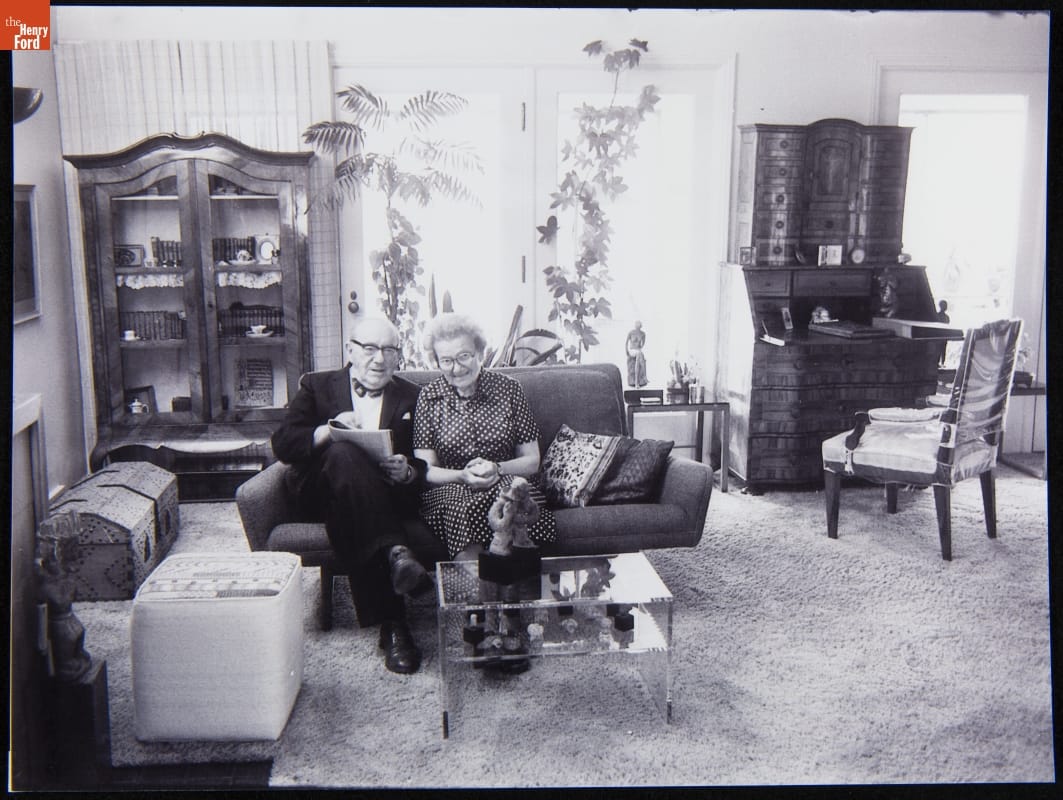
- Joseph Adler and Marie (Salomon) Adler, circa 1989 -
- circa 1989
- Collections - Artifact
Joseph Adler and Marie (Salomon) Adler, circa 1989
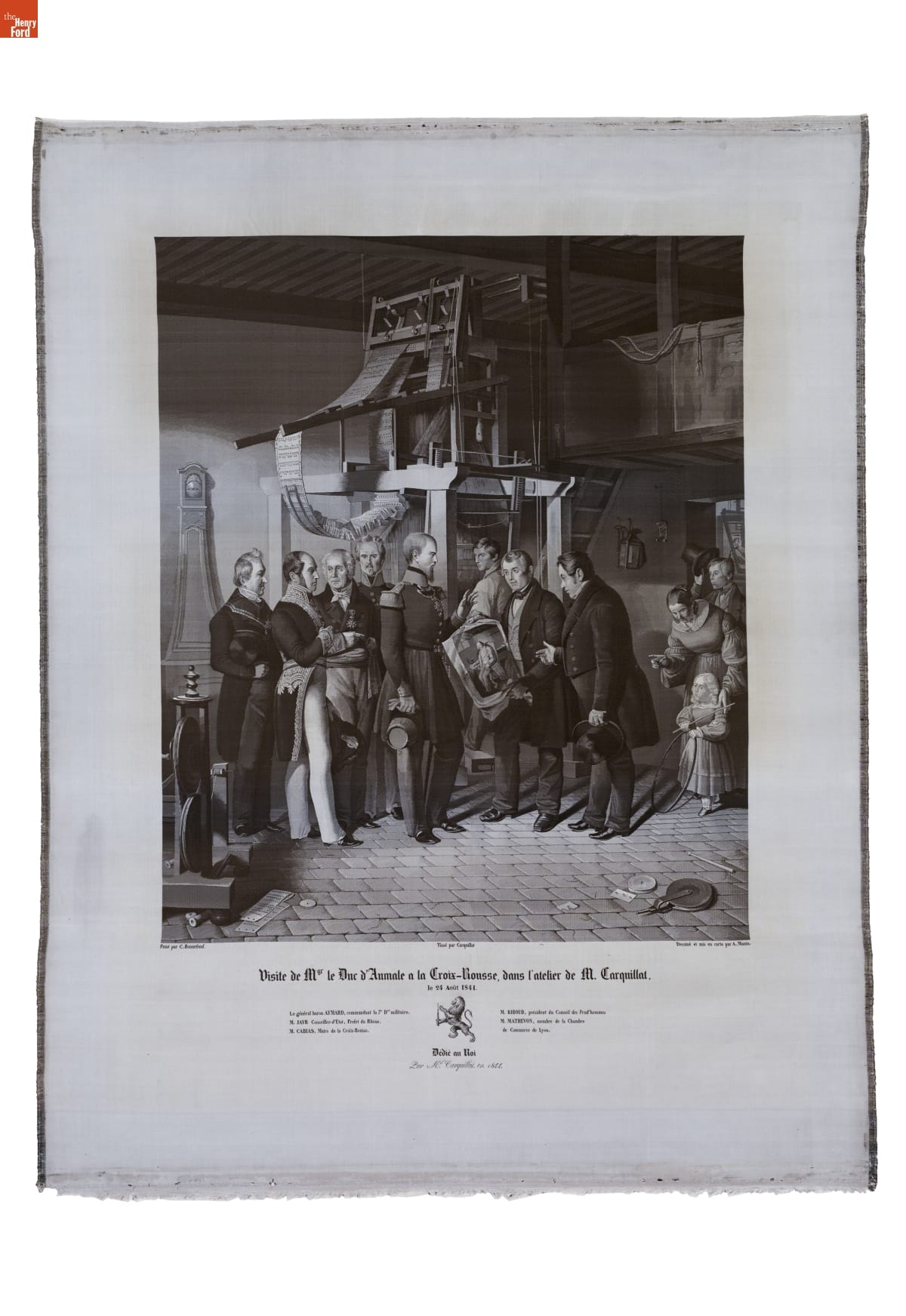
- Woven Silk Depiction of a Jacquard Loom in M. Carquillat's Workshop, 1844 -
- 1844
- Collections - Artifact
Woven Silk Depiction of a Jacquard Loom in M. Carquillat's Workshop, 1844
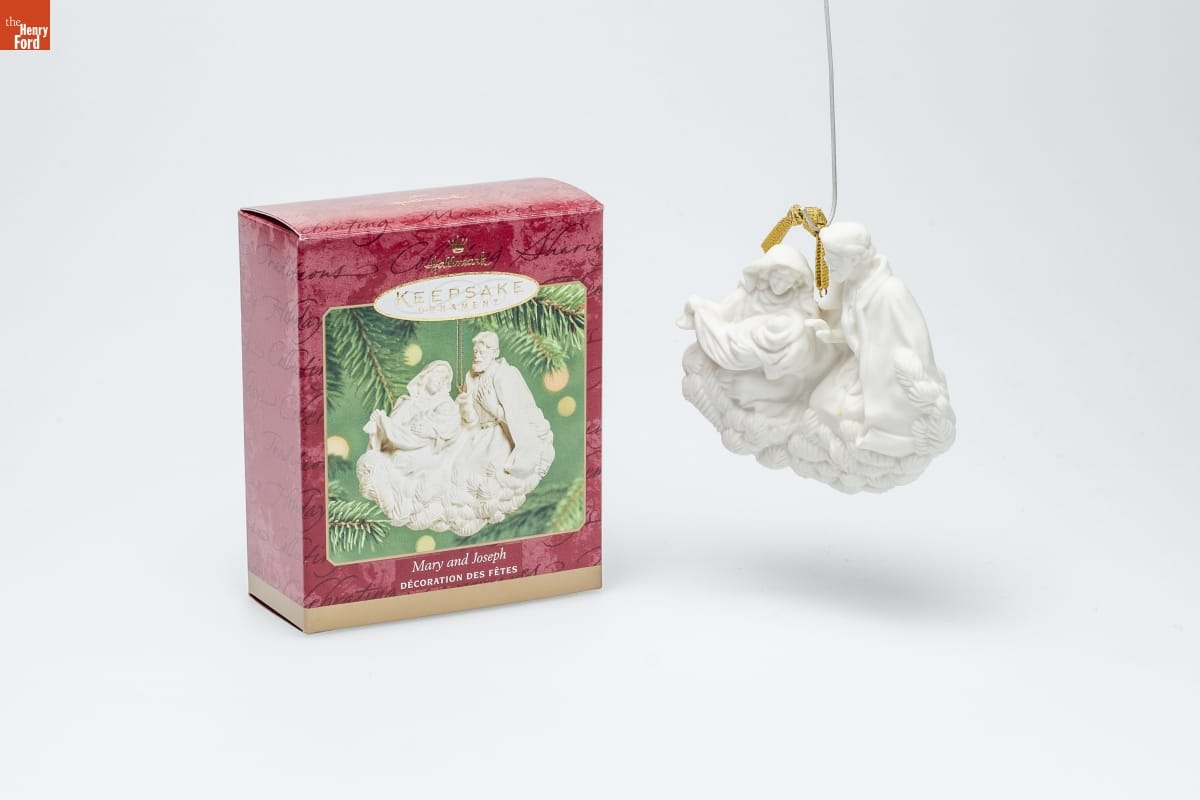
- Hallmark "Mary and Joseph" Christmas Ornament, 2001 - Already known for greeting cards, Hallmark introduced a line of Christmas ornaments in 1973. The company's annual release of an increasing array of ornaments revolutionized Christmas decorating, appealing to customers' interest in marking memories and milestones as well as expressing one's personality and unique tastes.
- 2001
- Collections - Artifact
Hallmark "Mary and Joseph" Christmas Ornament, 2001
Already known for greeting cards, Hallmark introduced a line of Christmas ornaments in 1973. The company's annual release of an increasing array of ornaments revolutionized Christmas decorating, appealing to customers' interest in marking memories and milestones as well as expressing one's personality and unique tastes.
- Sparking Innovation: The Jacquard Loom - The Jacquard loom was a significant breakthrough in the history of textile production, an essential manufacturing tool of the Industrial Revolution — and an inspiration for modern computing.

- December 23, 2015
- Collections - article
Sparking Innovation: The Jacquard Loom
The Jacquard loom was a significant breakthrough in the history of textile production, an essential manufacturing tool of the Industrial Revolution — and an inspiration for modern computing.
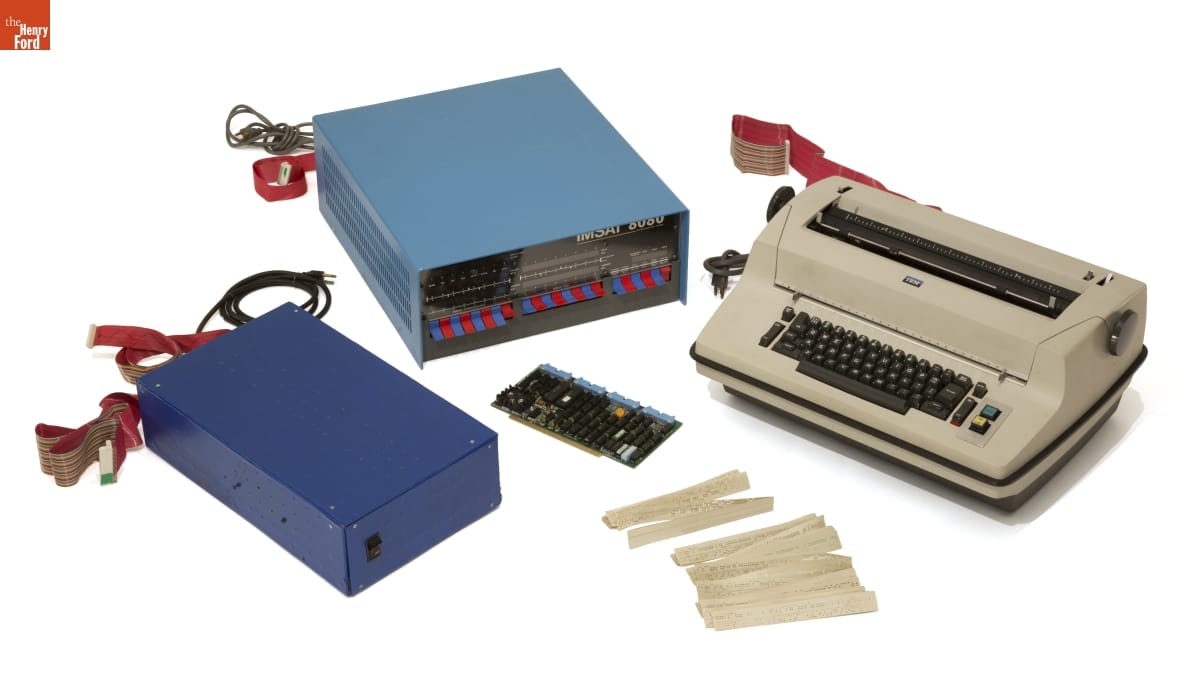
- Punch Card Technology - The IMSAI 8080 was a clone of the Altair 8800, the first mass marketed personal computer. It was a popular "kit computer," requiring assembly and programming. With no keyboard, toggle switches allowed input and LED lights signaled output. This could be modified using an IBM I/O typewriter. The donor, O.S. Narayanaswami, was a mechanical engineer interested in the educative power of computers.
- September 22, 2015
- Collections - Set
Punch Card Technology
The IMSAI 8080 was a clone of the Altair 8800, the first mass marketed personal computer. It was a popular "kit computer," requiring assembly and programming. With no keyboard, toggle switches allowed input and LED lights signaled output. This could be modified using an IBM I/O typewriter. The donor, O.S. Narayanaswami, was a mechanical engineer interested in the educative power of computers.
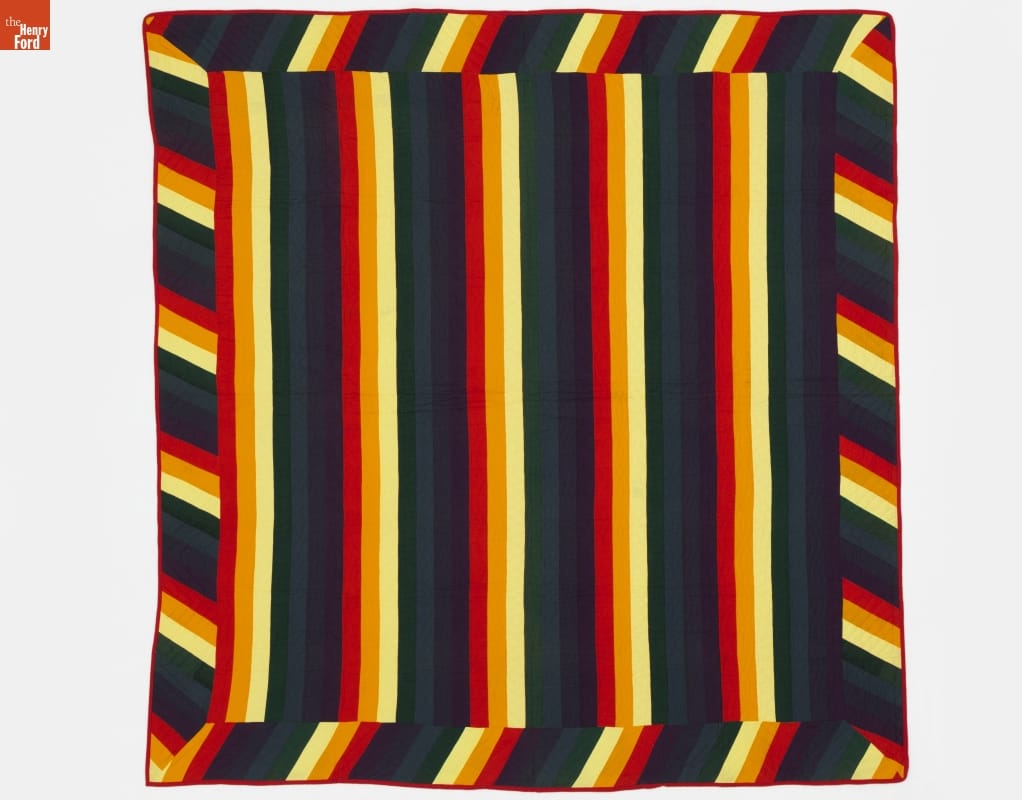
- Joseph's Coat Quilt, circa 1890 -
- circa 1890
- Collections - Artifact
Joseph's Coat Quilt, circa 1890
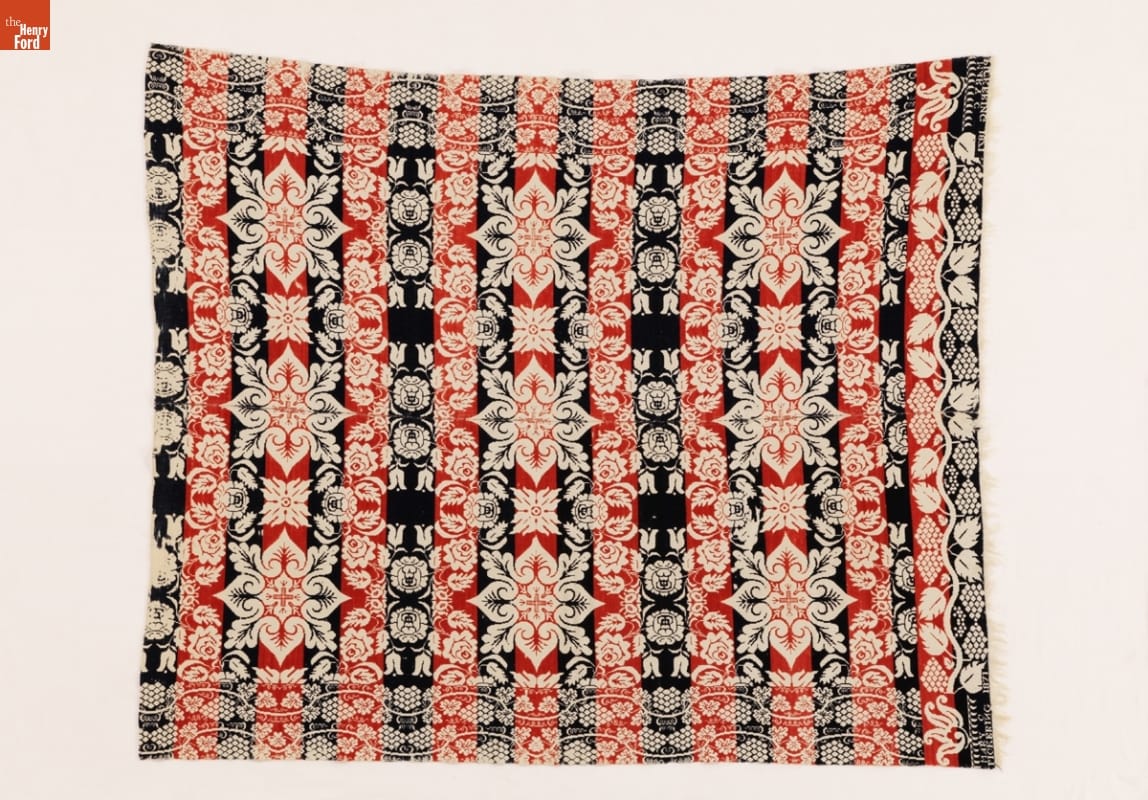
- Jacquard Coverlet Woven by Peter Ehrenhart, 1871 -
- 1871
- Collections - Artifact
Jacquard Coverlet Woven by Peter Ehrenhart, 1871
- Jacquard Loom, 1934 - Joseph-Marie Jacquard's loom, first developed in 1801, is programmable. It used a series of punched cards to control the lifting of each individual warp thread to weave a figured fabric. With this loom, weavers could create intricate patterns more easily, faster, and with better accuracy. Punch card technology became the basis for computer data storage during the 20th century.

- 1934
- Collections - Artifact
Jacquard Loom, 1934
Joseph-Marie Jacquard's loom, first developed in 1801, is programmable. It used a series of punched cards to control the lifting of each individual warp thread to weave a figured fabric. With this loom, weavers could create intricate patterns more easily, faster, and with better accuracy. Punch card technology became the basis for computer data storage during the 20th century.
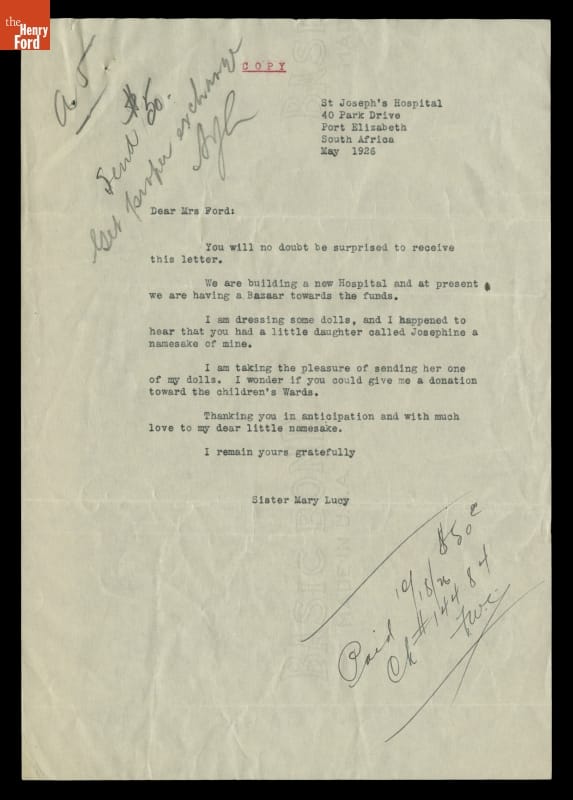
- Request for a Donation from Sister Mary Lucy of St. Joseph's Hospital to Eleanor Clay Ford, May 1926 -
- May 01, 1926
- Collections - Artifact
Request for a Donation from Sister Mary Lucy of St. Joseph's Hospital to Eleanor Clay Ford, May 1926