
Search
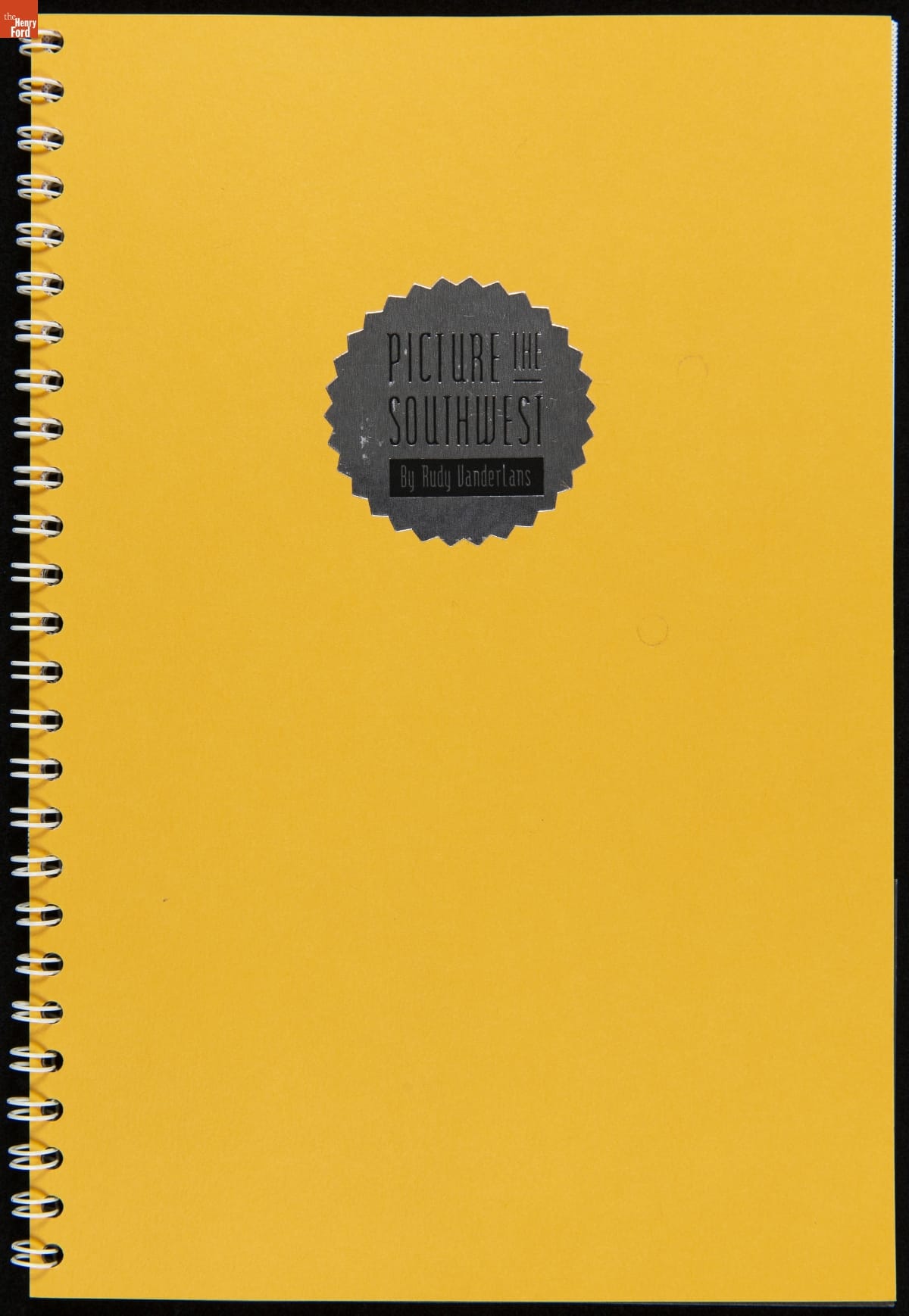
- Mailer for Emigre Graphics Artist-In-Residence, Rudy VanderLans, 1986 - Emigre is a digital type foundry established by Rudy VanderLans and Zuzana Licko. The company's history is linked with the introduction of the 1984 Macintosh computer, used to design their early bitmapped typefaces. Emigre's digital work gained notoriety -- defying visual communication standards with fractured, layered combinations of text and image. This item advertised fonts or other items available for purchase.
- 1986
- Collections - Artifact
Mailer for Emigre Graphics Artist-In-Residence, Rudy VanderLans, 1986
Emigre is a digital type foundry established by Rudy VanderLans and Zuzana Licko. The company's history is linked with the introduction of the 1984 Macintosh computer, used to design their early bitmapped typefaces. Emigre's digital work gained notoriety -- defying visual communication standards with fractured, layered combinations of text and image. This item advertised fonts or other items available for purchase.
- Artists in Residence at The Henry Ford - Read about The Henry Ford's commitment to studio glass through our artist in residence program.

- May 30, 2017
- Collections - article
Artists in Residence at The Henry Ford
Read about The Henry Ford's commitment to studio glass through our artist in residence program.
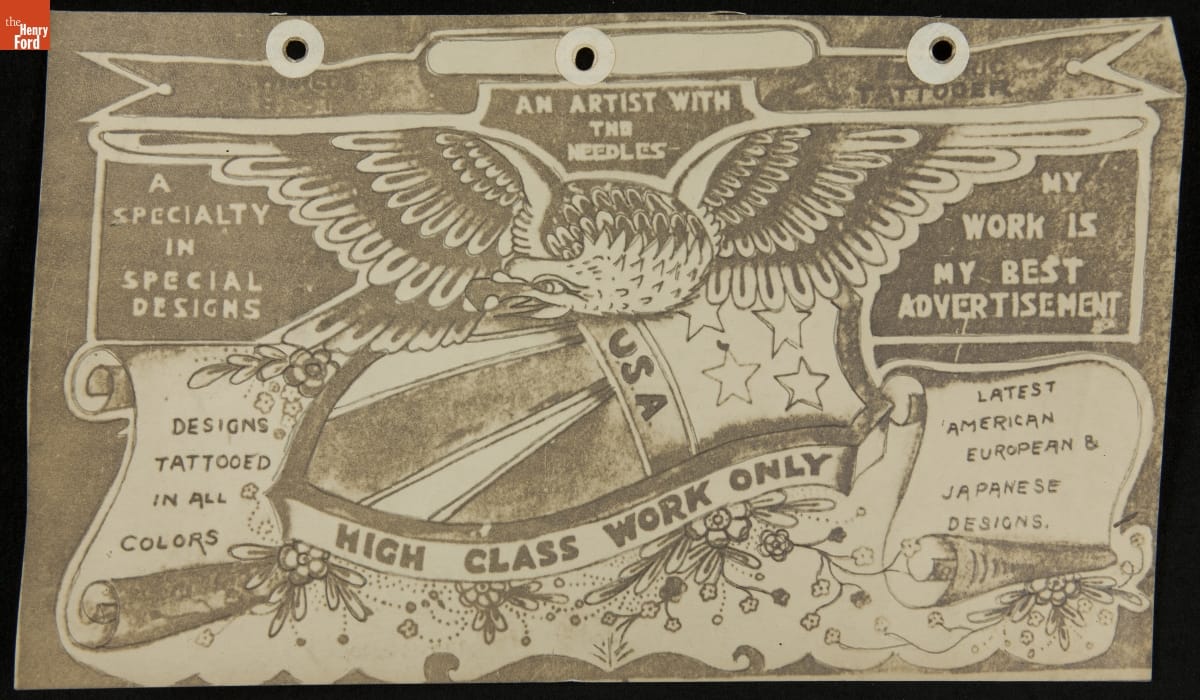
- Tattoo Artist's Advertisement, circa 1925 - Tattoos communicate stories. Their content ranges from deeply personal and traditional--to regrettable and frivolous. In the early 1900s, "Professor" Waters apprenticed as a tattoo artist in carnivals and New York's Bowery District. He ran a successful supply shop in Detroit (1918-1939), patenting the standard "two-coil" tattoo machine in 1929. Designs from his flash sheets continue to inspire tattooists today.
- circa 1925
- Collections - Artifact
Tattoo Artist's Advertisement, circa 1925
Tattoos communicate stories. Their content ranges from deeply personal and traditional--to regrettable and frivolous. In the early 1900s, "Professor" Waters apprenticed as a tattoo artist in carnivals and New York's Bowery District. He ran a successful supply shop in Detroit (1918-1939), patenting the standard "two-coil" tattoo machine in 1929. Designs from his flash sheets continue to inspire tattooists today.
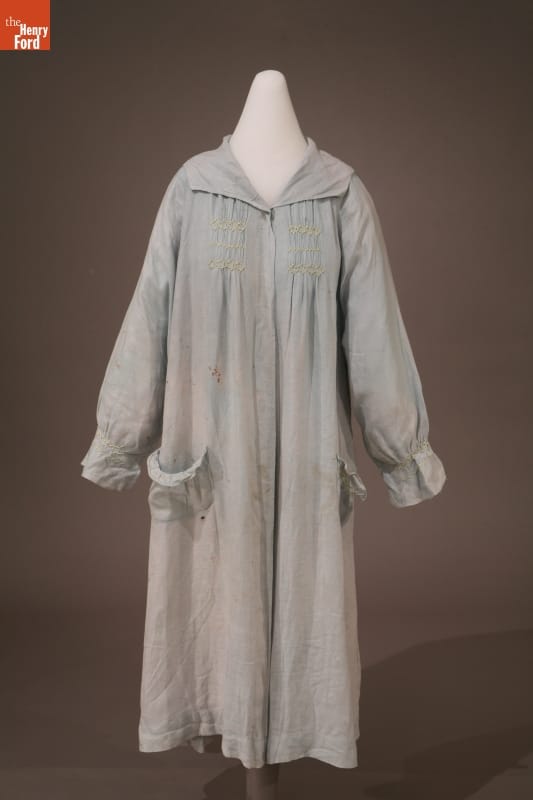
- Artist's Smock, 1910-1925 -
- 1910-1925
- Collections - Artifact
Artist's Smock, 1910-1925
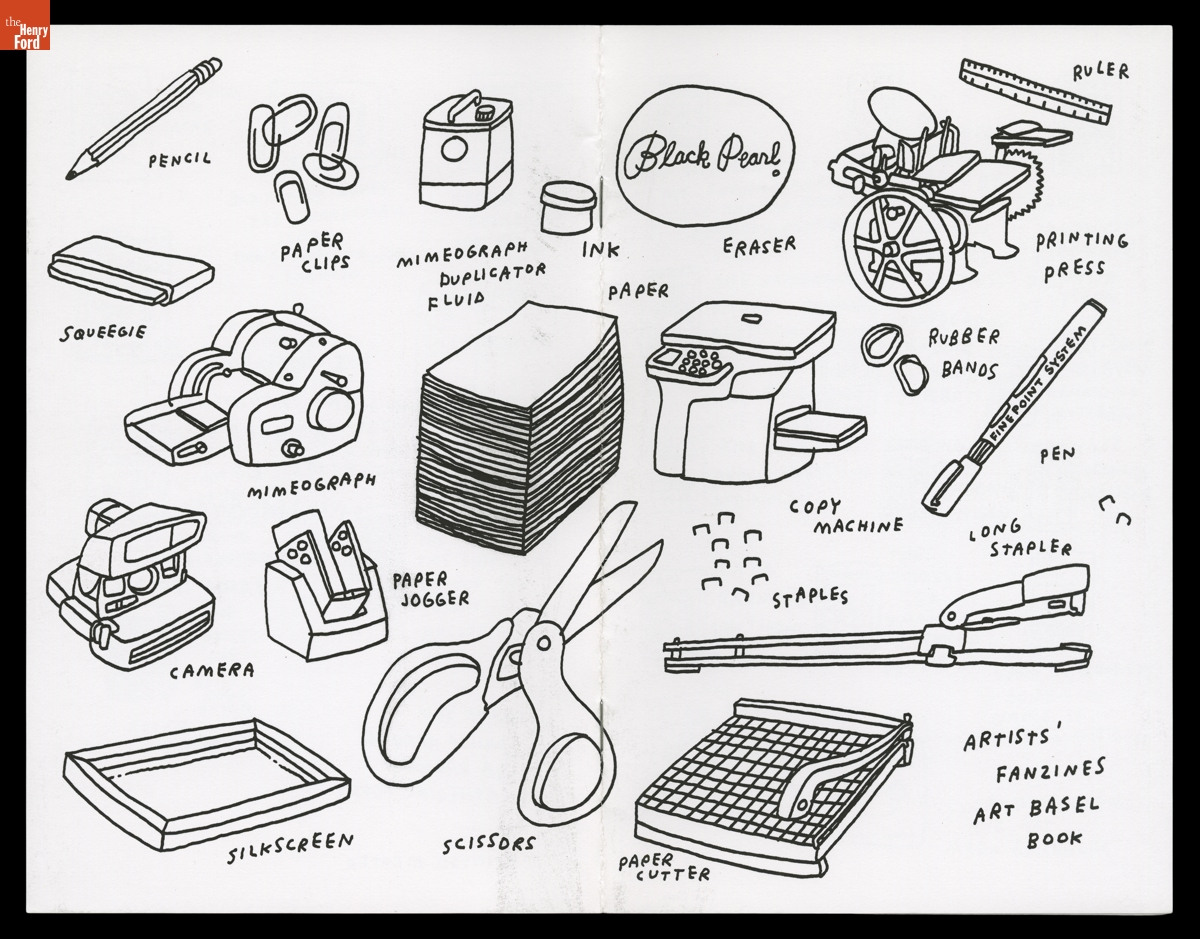
- "Artist's Fanzines Art Basel Book," 2006 - Jason Polan was a Michigan-born, New York-based illustrator whose visual storytelling sought to elevate the everyday—with humor and care. This collection documents Polan's life and prolific art practice, spanning childhood to adulthood; he was also a convener of creative communities. Inspiration, ideation, and completed projects are represented in preparatory material, printed matter, publications, product design, artwork, and personal collecting.
- 2010
- Collections - Artifact
"Artist's Fanzines Art Basel Book," 2006
Jason Polan was a Michigan-born, New York-based illustrator whose visual storytelling sought to elevate the everyday—with humor and care. This collection documents Polan's life and prolific art practice, spanning childhood to adulthood; he was also a convener of creative communities. Inspiration, ideation, and completed projects are represented in preparatory material, printed matter, publications, product design, artwork, and personal collecting.
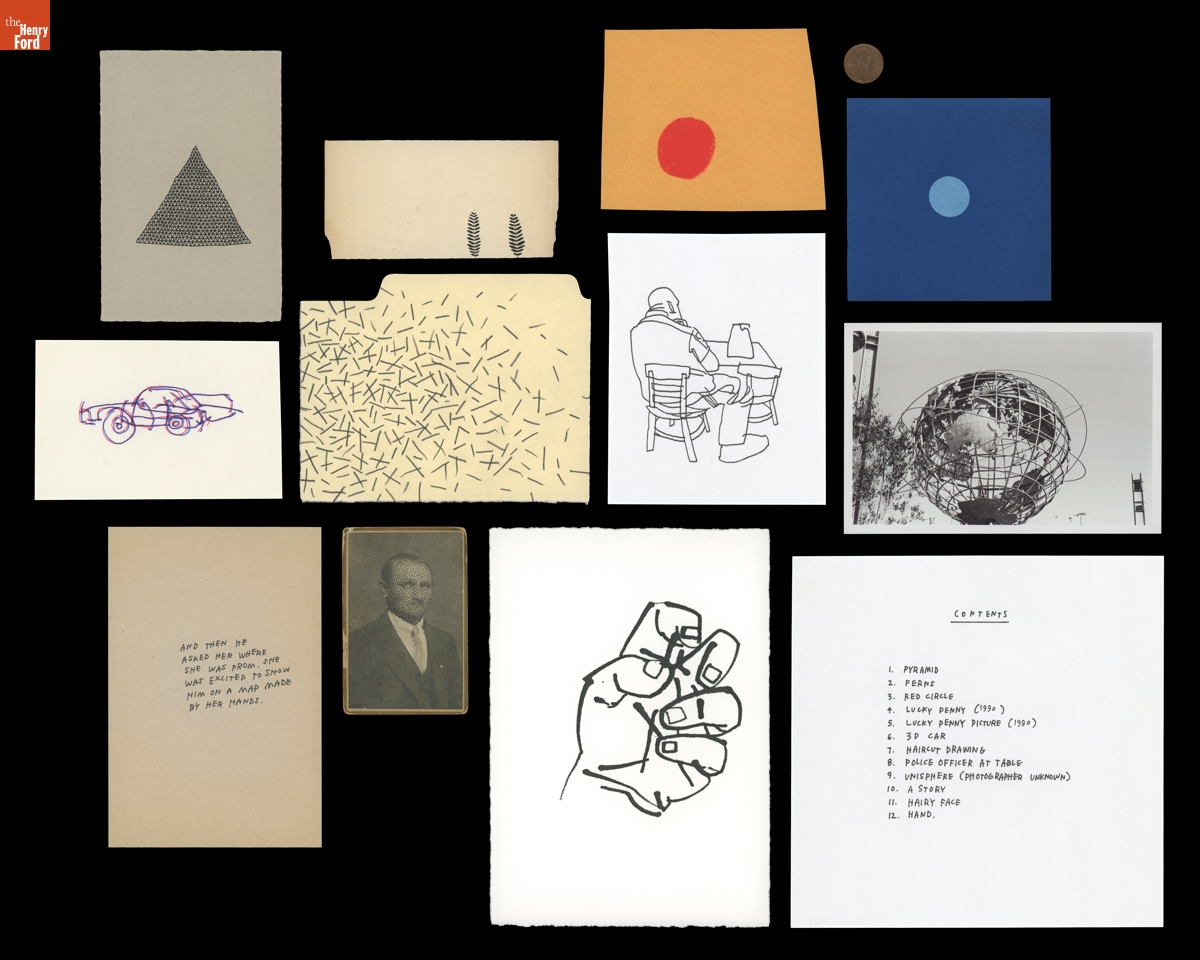
- Artist's Portfolio by Jason Polan, circa 2010 - Jason Polan was a Michigan-born, New York-based illustrator whose visual storytelling sought to elevate the everyday—with humor and care. This collection documents Polan's life and prolific art practice, spanning childhood to adulthood; he was also a convener of creative communities. Inspiration, ideation, and completed projects are represented in preparatory material, printed matter, publications, product design, artwork, and personal collecting.
- circa 2010
- Collections - Artifact
Artist's Portfolio by Jason Polan, circa 2010
Jason Polan was a Michigan-born, New York-based illustrator whose visual storytelling sought to elevate the everyday—with humor and care. This collection documents Polan's life and prolific art practice, spanning childhood to adulthood; he was also a convener of creative communities. Inspiration, ideation, and completed projects are represented in preparatory material, printed matter, publications, product design, artwork, and personal collecting.
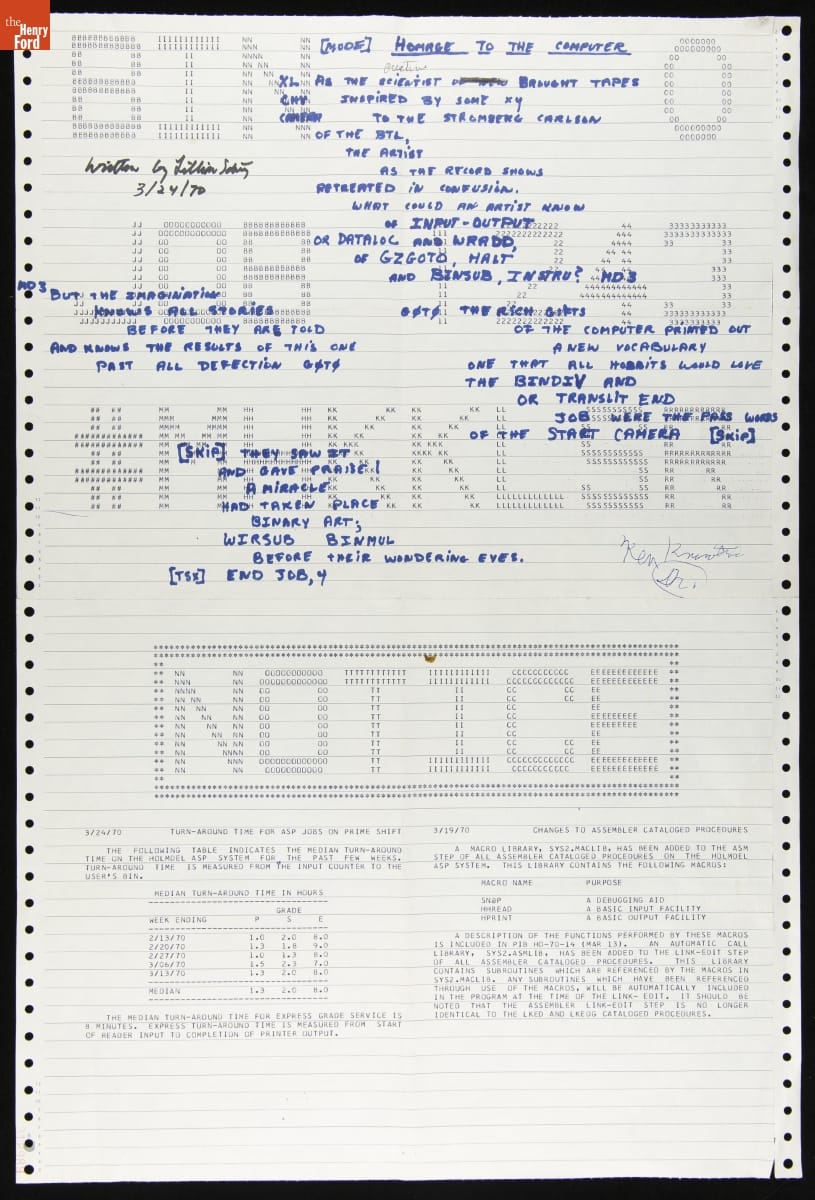
- Original Sheets for the Computer Artist's Handbook, 1970 - Lillian Schwartz is a pioneer of computer-generated art. From 1969-2002, she was a "resident visitor" at Bell Laboratories, producing groundbreaking films, videos, and multimedia works. The Schwartz Collection spans Lillian's childhood into her late career, documenting an expansive mindset, mastery over traditional and experimental mediums alike--and above all--an ability to create inspirational connections between science, art, and technology.
- 1970
- Collections - Artifact
Original Sheets for the Computer Artist's Handbook, 1970
Lillian Schwartz is a pioneer of computer-generated art. From 1969-2002, she was a "resident visitor" at Bell Laboratories, producing groundbreaking films, videos, and multimedia works. The Schwartz Collection spans Lillian's childhood into her late career, documenting an expansive mindset, mastery over traditional and experimental mediums alike--and above all--an ability to create inspirational connections between science, art, and technology.
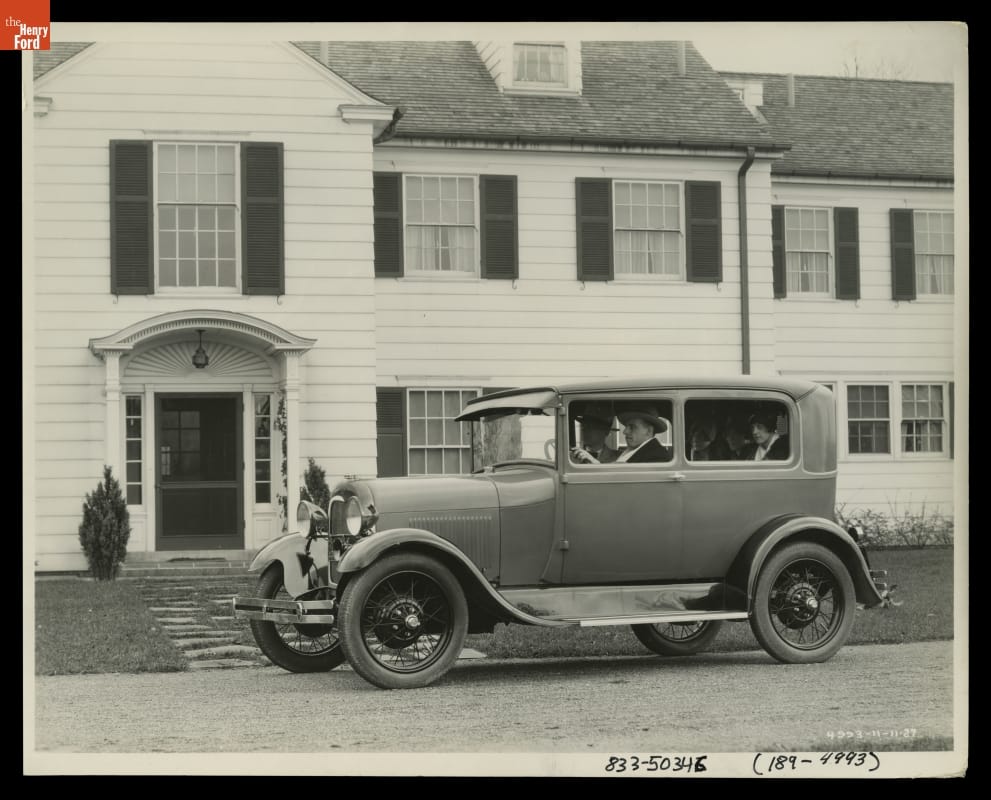
- 1928 Ford Model A Tudor in Front of Residence - Ford Motor Company introduced its all-new Model A for 1928. Eight different passenger bodies were available, ranging from the basic $480 roadster convertible to the $585 Fordor enclosed sedan. The Model A's nickel radiator shell and full-crown fenders gave it a sophisticated look inspired by Lincoln. Ford built nearly 633,600 cars that year.
- November 11, 1927
- Collections - Artifact
1928 Ford Model A Tudor in Front of Residence
Ford Motor Company introduced its all-new Model A for 1928. Eight different passenger bodies were available, ranging from the basic $480 roadster convertible to the $585 Fordor enclosed sedan. The Model A's nickel radiator shell and full-crown fenders gave it a sophisticated look inspired by Lincoln. Ford built nearly 633,600 cars that year.
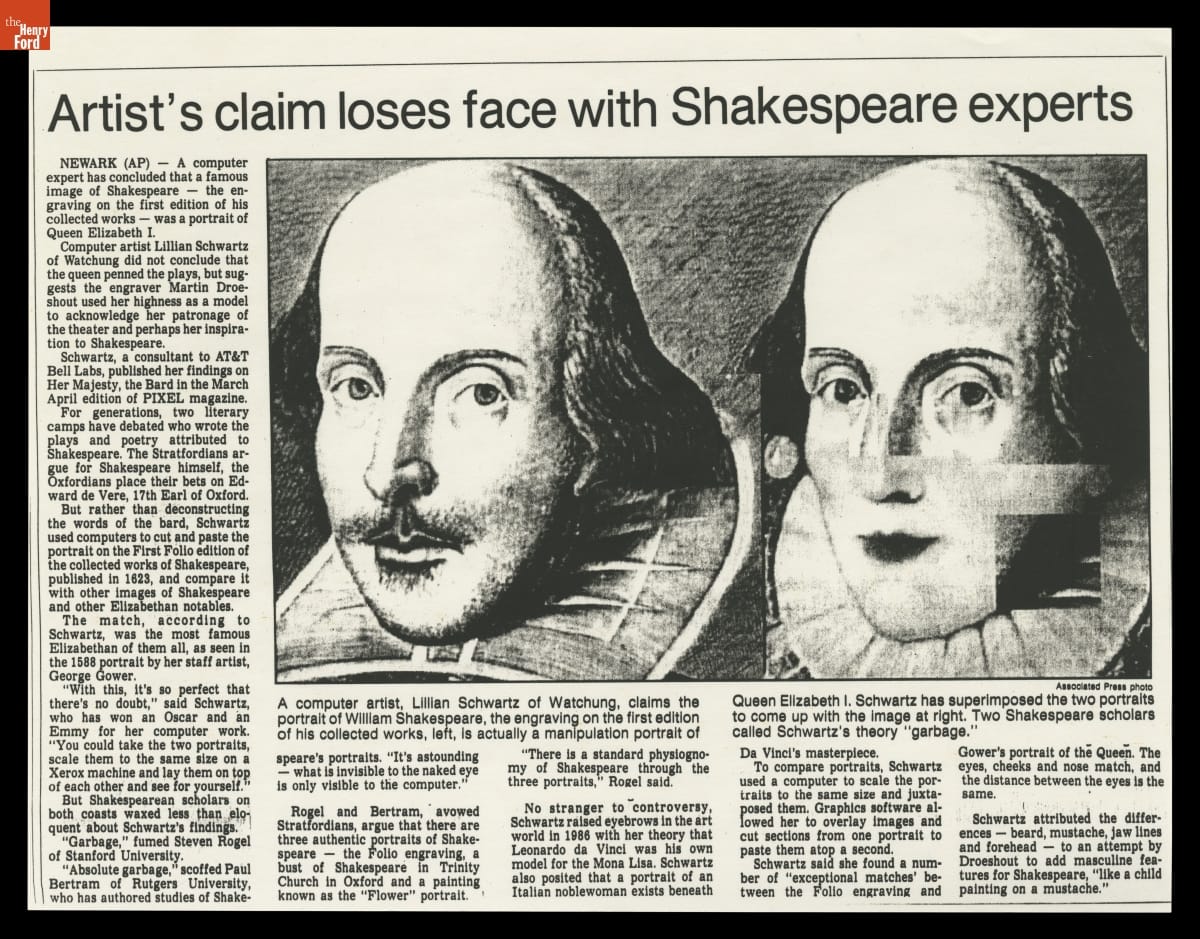
- "Artist's Claim Loses Face with Shakespeare Experts," Newspaper Article, circa 1992 - Lillian Schwartz is a pioneer of computer-generated art. From 1969-2002, she was a "resident visitor" at Bell Laboratories, producing groundbreaking films, videos, and multimedia works. The Schwartz Collection spans Lillian's childhood into her late career, documenting an expansive mindset, mastery over traditional and experimental mediums alike--and above all--an ability to create inspirational connections between science, art, and technology.
- circa 1992
- Collections - Artifact
"Artist's Claim Loses Face with Shakespeare Experts," Newspaper Article, circa 1992
Lillian Schwartz is a pioneer of computer-generated art. From 1969-2002, she was a "resident visitor" at Bell Laboratories, producing groundbreaking films, videos, and multimedia works. The Schwartz Collection spans Lillian's childhood into her late career, documenting an expansive mindset, mastery over traditional and experimental mediums alike--and above all--an ability to create inspirational connections between science, art, and technology.
- Artist's Proof, "Architecture Test" by Lillian F. Schwartz, 1970 - Lillian Schwartz is a pioneer of computer-generated art. From 1969-2002, she was a "resident visitor" at Bell Laboratories, producing groundbreaking films, videos, and multimedia works. The Schwartz Collection spans Lillian's childhood into her late career, documenting an expansive mindset, mastery over traditional and experimental mediums alike--and above all--an ability to create inspirational connections between science, art, and technology.
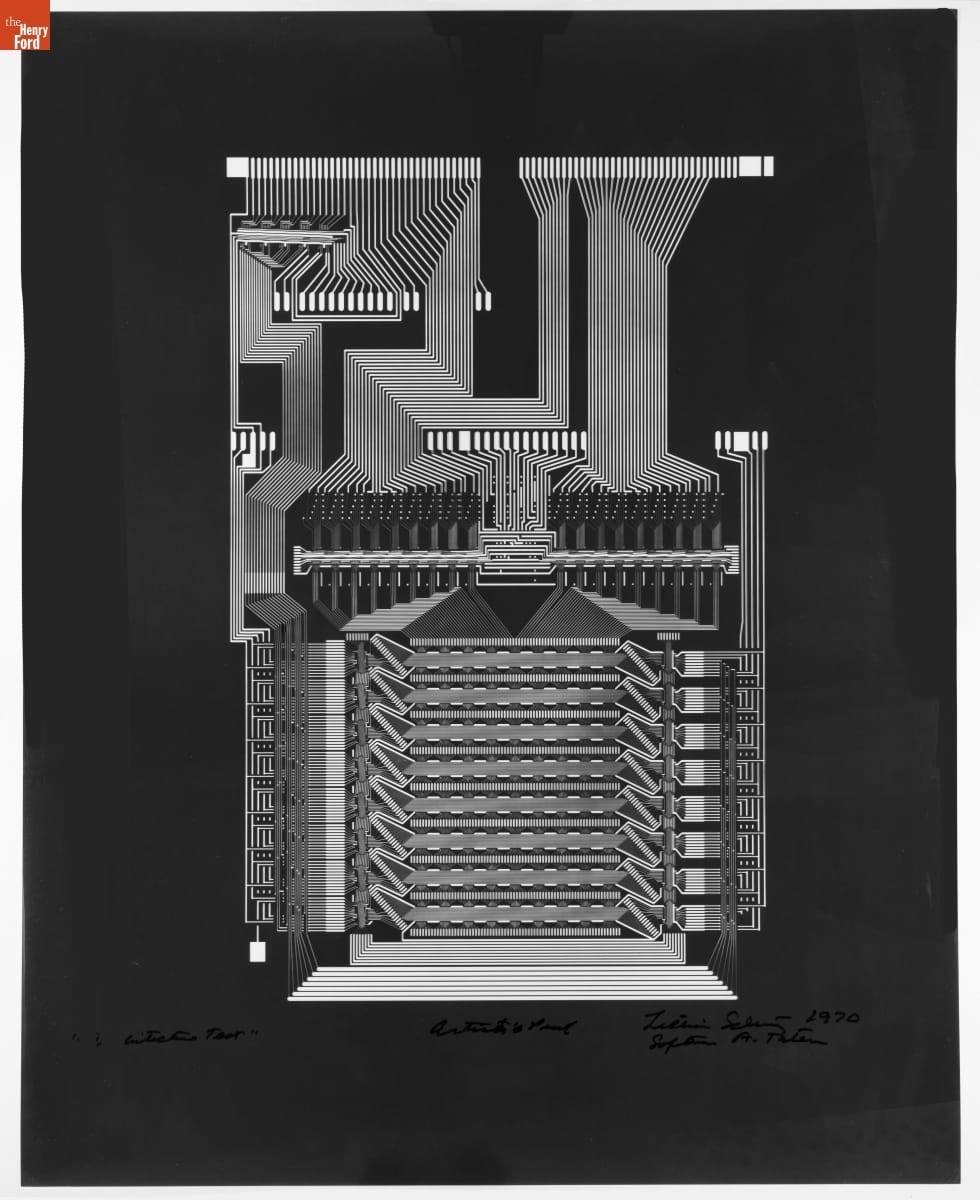
- 1970
- Collections - Artifact
Artist's Proof, "Architecture Test" by Lillian F. Schwartz, 1970
Lillian Schwartz is a pioneer of computer-generated art. From 1969-2002, she was a "resident visitor" at Bell Laboratories, producing groundbreaking films, videos, and multimedia works. The Schwartz Collection spans Lillian's childhood into her late career, documenting an expansive mindset, mastery over traditional and experimental mediums alike--and above all--an ability to create inspirational connections between science, art, and technology.