
Search
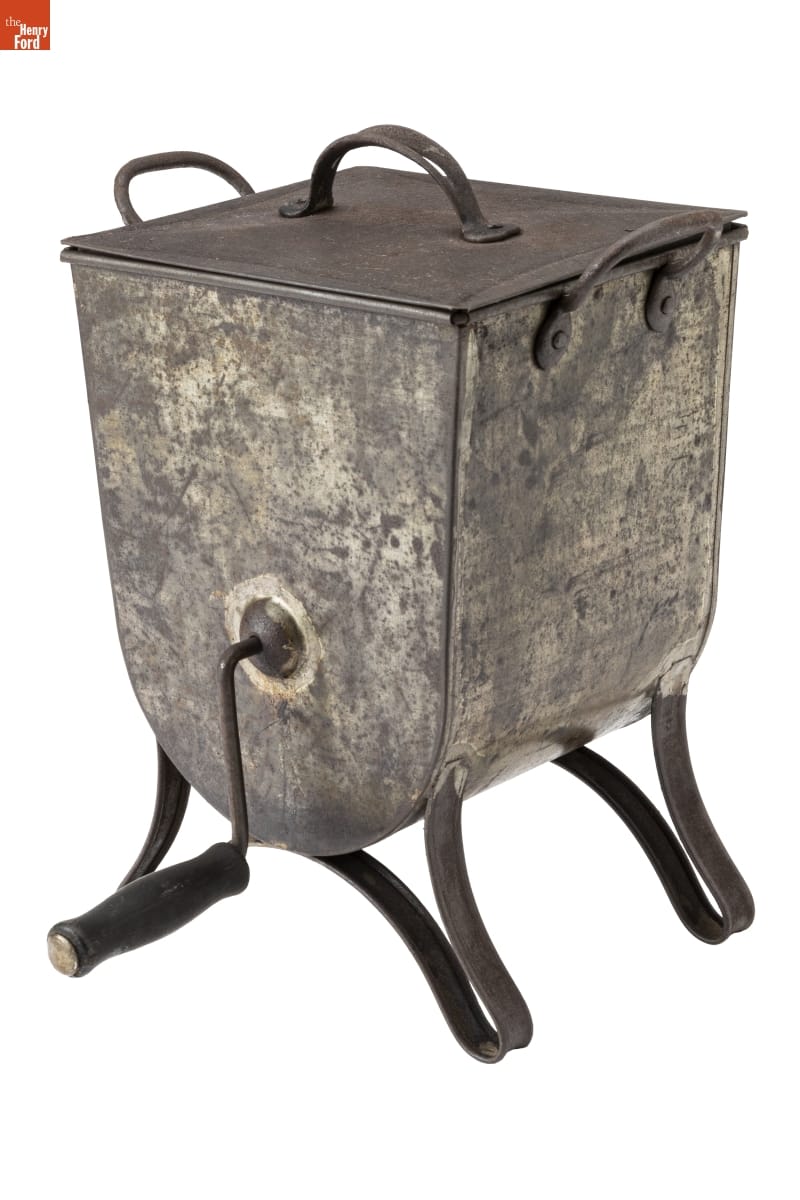
- Fries & Co. Cream Whipper, circa 1900 -
- circa 1900
- Collections - Artifact
Fries & Co. Cream Whipper, circa 1900
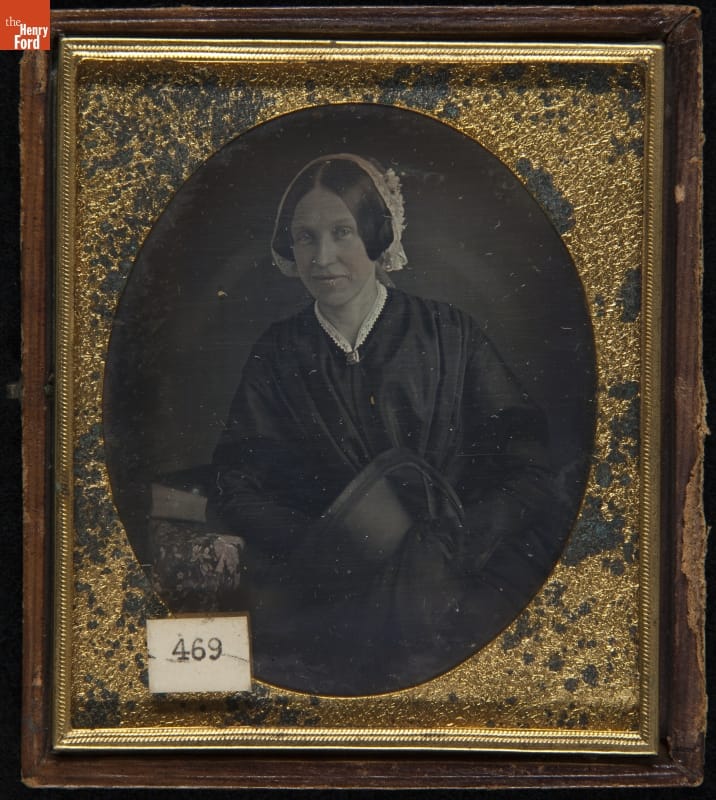
- Portrait of a Woman, circa 1855 - The daguerreotype, popular in the early 1840s-late 1850s, was the first form of photography available to the public. Sheets of silver-plated copper--polished to a mirror finish--were bathed in photosensitive vapors, and exposed in cameras. In formal studios and traveling booths, photographers created affordable portraits. For the first time, people saw their likenesses--fixed permanently in time and place.
- circa 1850
- Collections - Artifact
Portrait of a Woman, circa 1855
The daguerreotype, popular in the early 1840s-late 1850s, was the first form of photography available to the public. Sheets of silver-plated copper--polished to a mirror finish--were bathed in photosensitive vapors, and exposed in cameras. In formal studios and traveling booths, photographers created affordable portraits. For the first time, people saw their likenesses--fixed permanently in time and place.
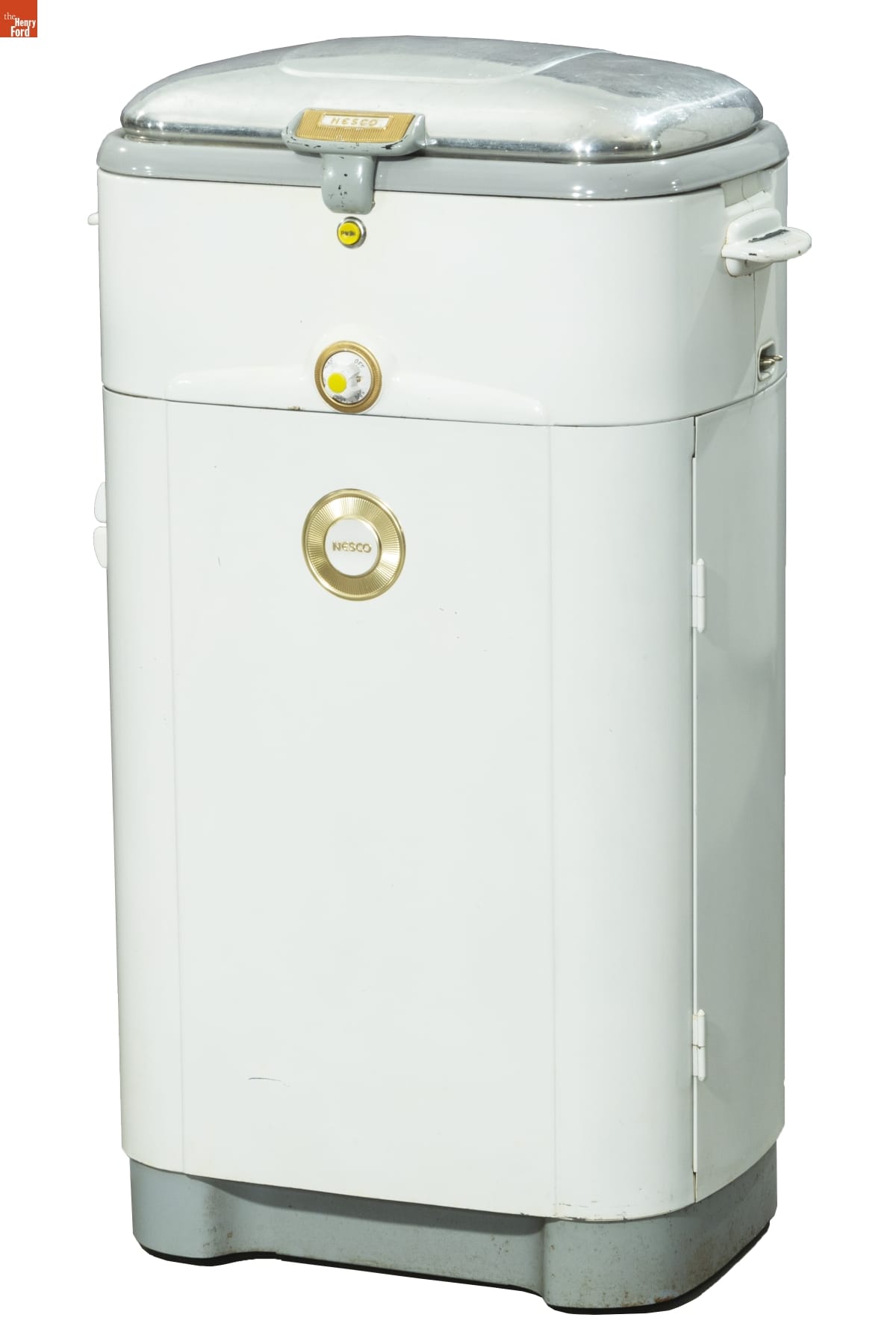
- NESCO Automatic Electric Roaster and Stand, 1948-1950 -
- 1948-1950
- Collections - Artifact
NESCO Automatic Electric Roaster and Stand, 1948-1950
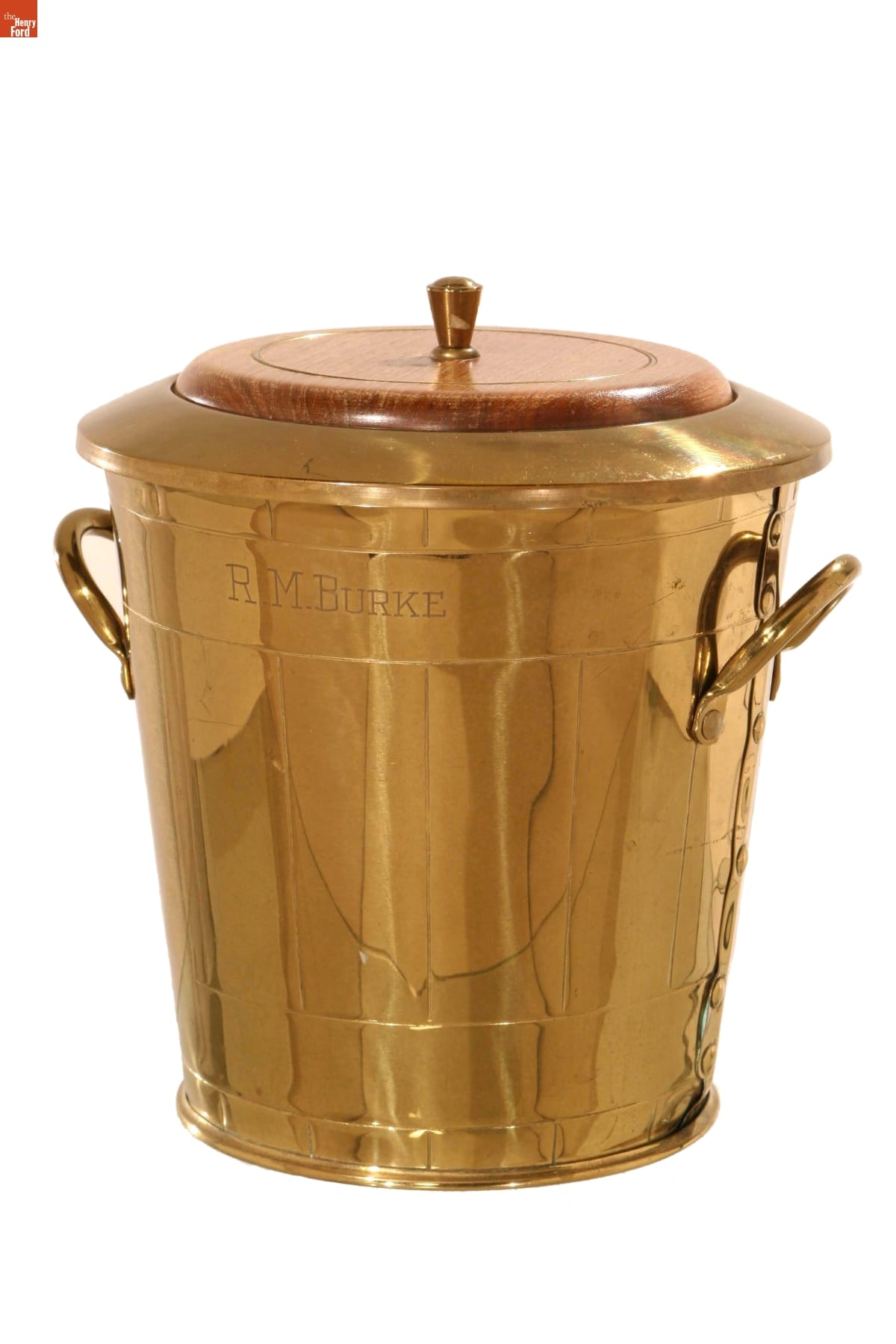
- Everlast "Solid Brass" Ice Bucket, 1958-1961 - In 1932, Louis Schnitzer and Nathan Gelfman formed Everlast Metal Products Corporation, producing high-quality, hand-forged aluminum giftware. In an era of growing uniformity via factory production, the "made by hand" aspect of these products held an aesthetic appeal for consumers. Over the years, the company introduced various product lines, including "Solid Brass" (seen here), "Solid Copper," and "Pewter."
- 1958-1961
- Collections - Artifact
Everlast "Solid Brass" Ice Bucket, 1958-1961
In 1932, Louis Schnitzer and Nathan Gelfman formed Everlast Metal Products Corporation, producing high-quality, hand-forged aluminum giftware. In an era of growing uniformity via factory production, the "made by hand" aspect of these products held an aesthetic appeal for consumers. Over the years, the company introduced various product lines, including "Solid Brass" (seen here), "Solid Copper," and "Pewter."
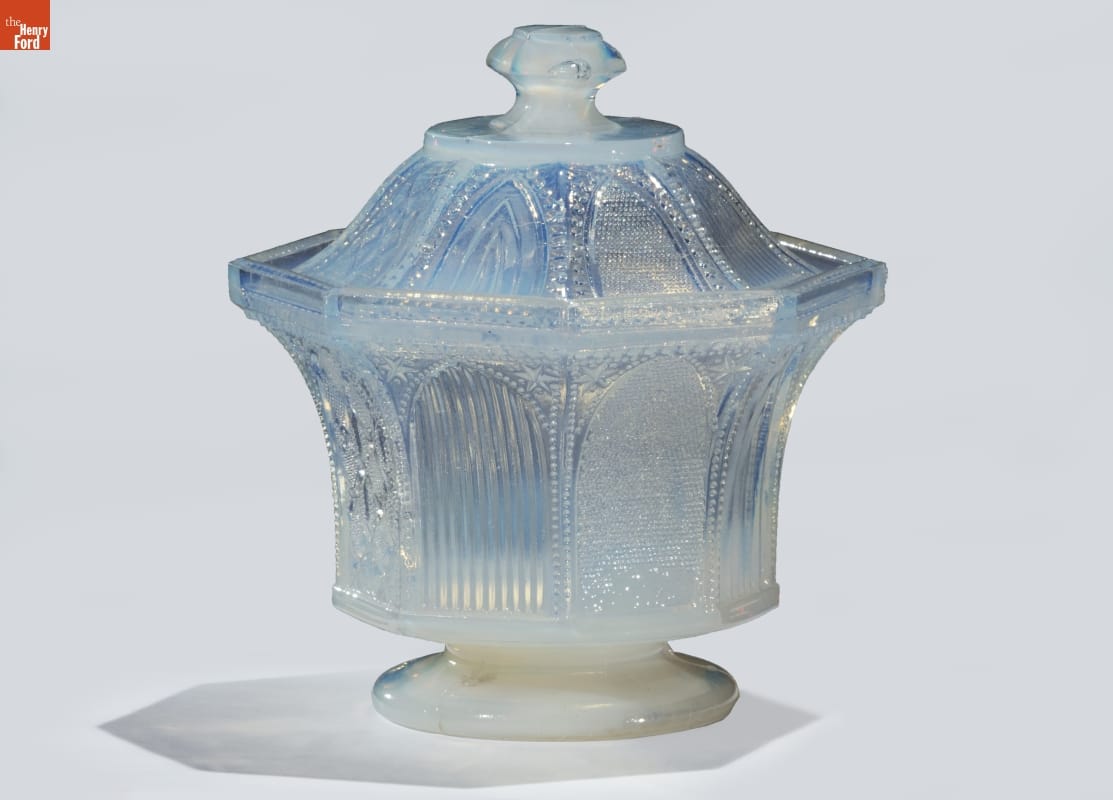
- Sugar Bowl, 1835-1850 - Mechanically pressed glass was an innovation in glass history, making decorative, "patterned" glass available to a broad audience. One of the earliest types of pressed glass, dating to the 1830s is known as "Lacy Glass". Complex stippled patterns were developed to help hide technical defects caused by early presses, when the glass gather was cut off and dropped into a mold.
- 1835-1850
- Collections - Artifact
Sugar Bowl, 1835-1850
Mechanically pressed glass was an innovation in glass history, making decorative, "patterned" glass available to a broad audience. One of the earliest types of pressed glass, dating to the 1830s is known as "Lacy Glass". Complex stippled patterns were developed to help hide technical defects caused by early presses, when the glass gather was cut off and dropped into a mold.
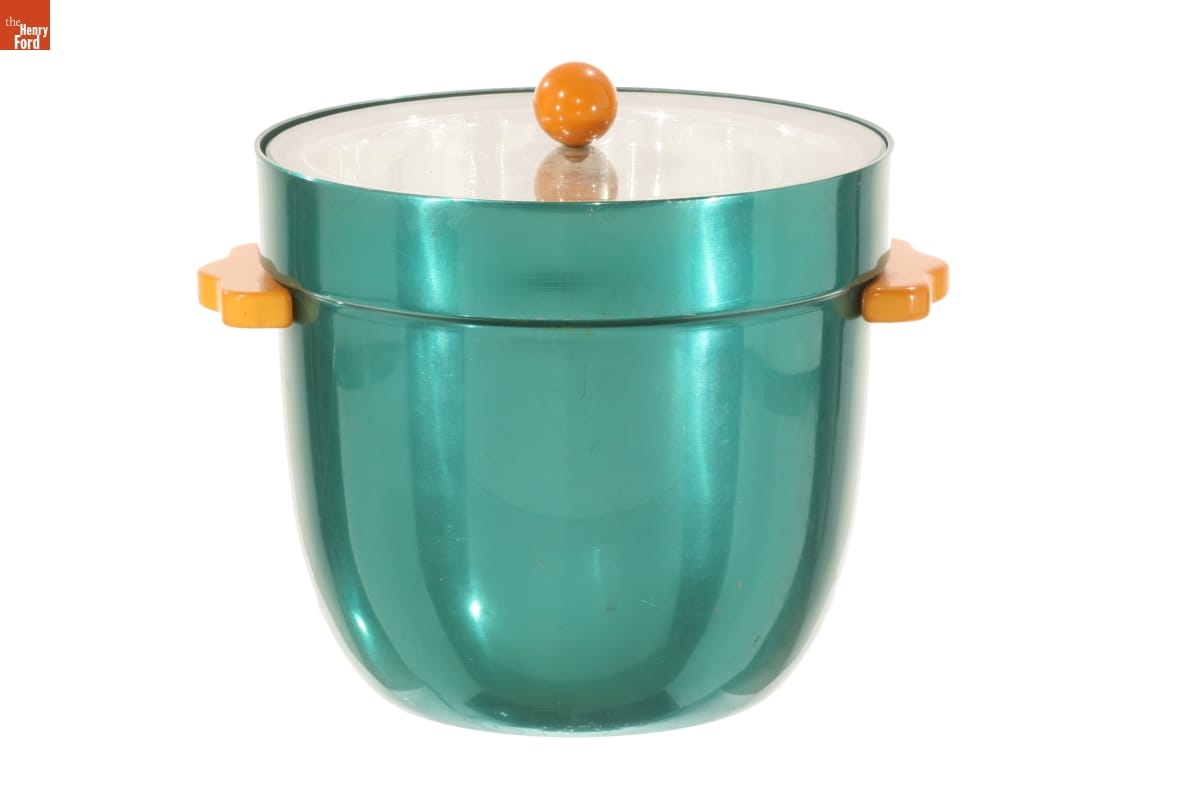
- Everlast "Neocraft" Ice Bucket, 1938-1955 - In 1932, Louis Schnitzer and Nathan Gelfman formed Everlast Metal Products Corporation, producing high-quality, hand-forged aluminum giftware. In an era of growing uniformity via factory production, the "made by hand" aspect of these products held an aesthetic appeal for consumers. In 1938, Everlast introduced the "Neocraft" product line, made of anodized aluminum and featuring vibrant colors and clean lines.
- 1938-1955
- Collections - Artifact
Everlast "Neocraft" Ice Bucket, 1938-1955
In 1932, Louis Schnitzer and Nathan Gelfman formed Everlast Metal Products Corporation, producing high-quality, hand-forged aluminum giftware. In an era of growing uniformity via factory production, the "made by hand" aspect of these products held an aesthetic appeal for consumers. In 1938, Everlast introduced the "Neocraft" product line, made of anodized aluminum and featuring vibrant colors and clean lines.
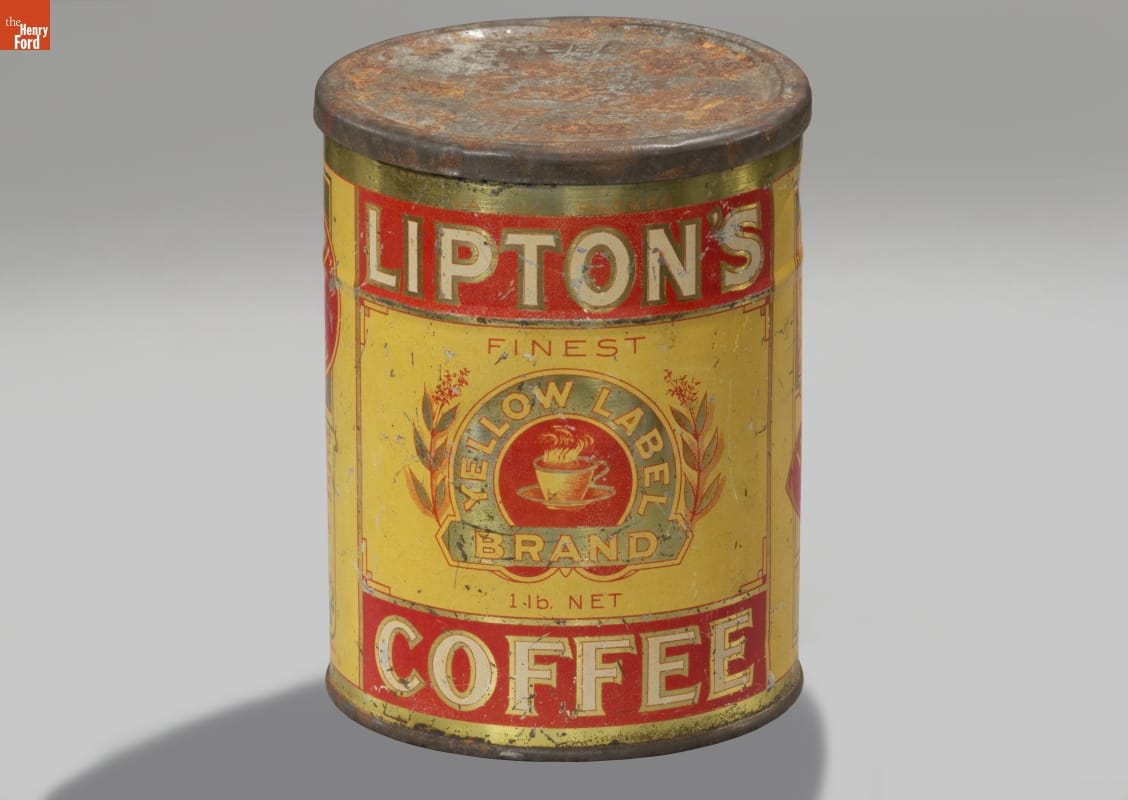
- Lipton's Coffee Can, 1920-1925 -
- 1920-1925
- Collections - Artifact
Lipton's Coffee Can, 1920-1925
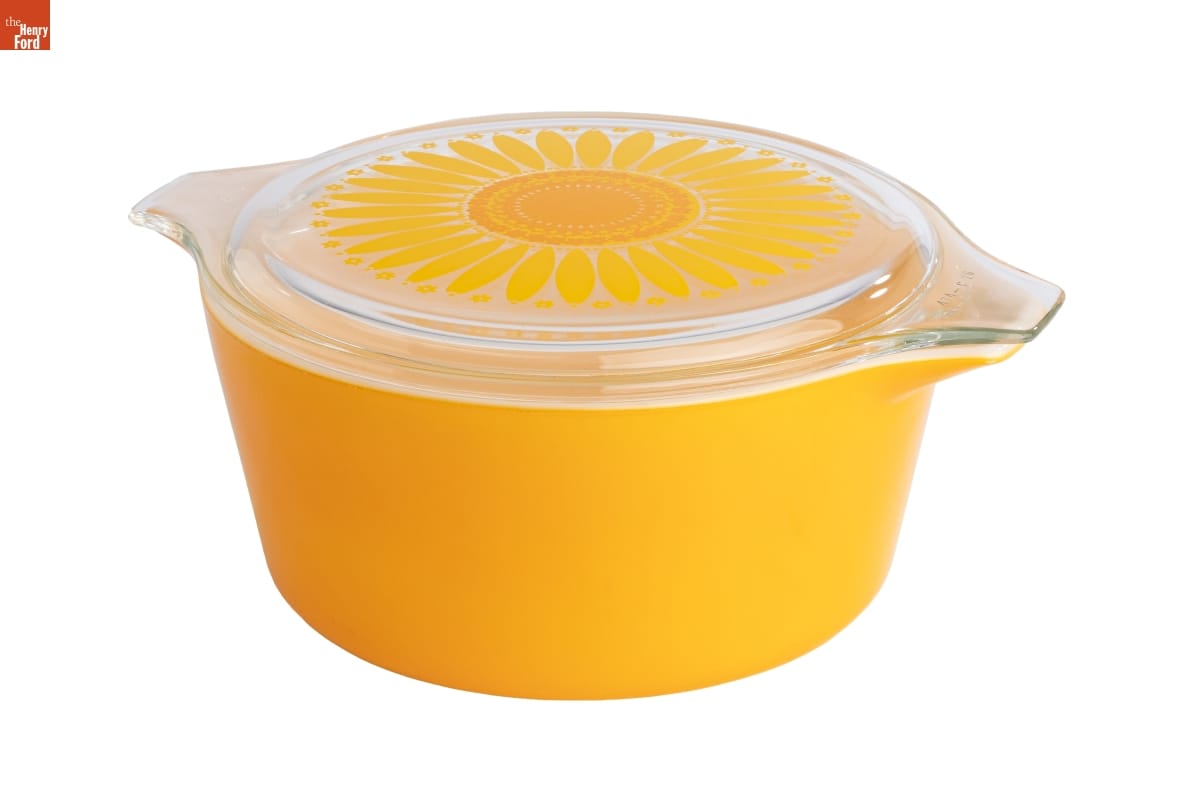
- Pyrex Casserole Dish, 1968-1972 - Corning Glass Works' heat-resistant glass bakeware, called Pyrex, was introduced in the mid-1910s. Pyrex products were inexpensive, with an easy-to-clean smooth surface. Pyrex glassware could travel from freezer to oven to table. Colored Pyrex kitchenware was introduced in 1947. Corning introduced its Daisy pattern with its bright and cheerful sunburst colors in 1968. It was discontinued five years later.
- 1968-1972
- Collections - Artifact
Pyrex Casserole Dish, 1968-1972
Corning Glass Works' heat-resistant glass bakeware, called Pyrex, was introduced in the mid-1910s. Pyrex products were inexpensive, with an easy-to-clean smooth surface. Pyrex glassware could travel from freezer to oven to table. Colored Pyrex kitchenware was introduced in 1947. Corning introduced its Daisy pattern with its bright and cheerful sunburst colors in 1968. It was discontinued five years later.
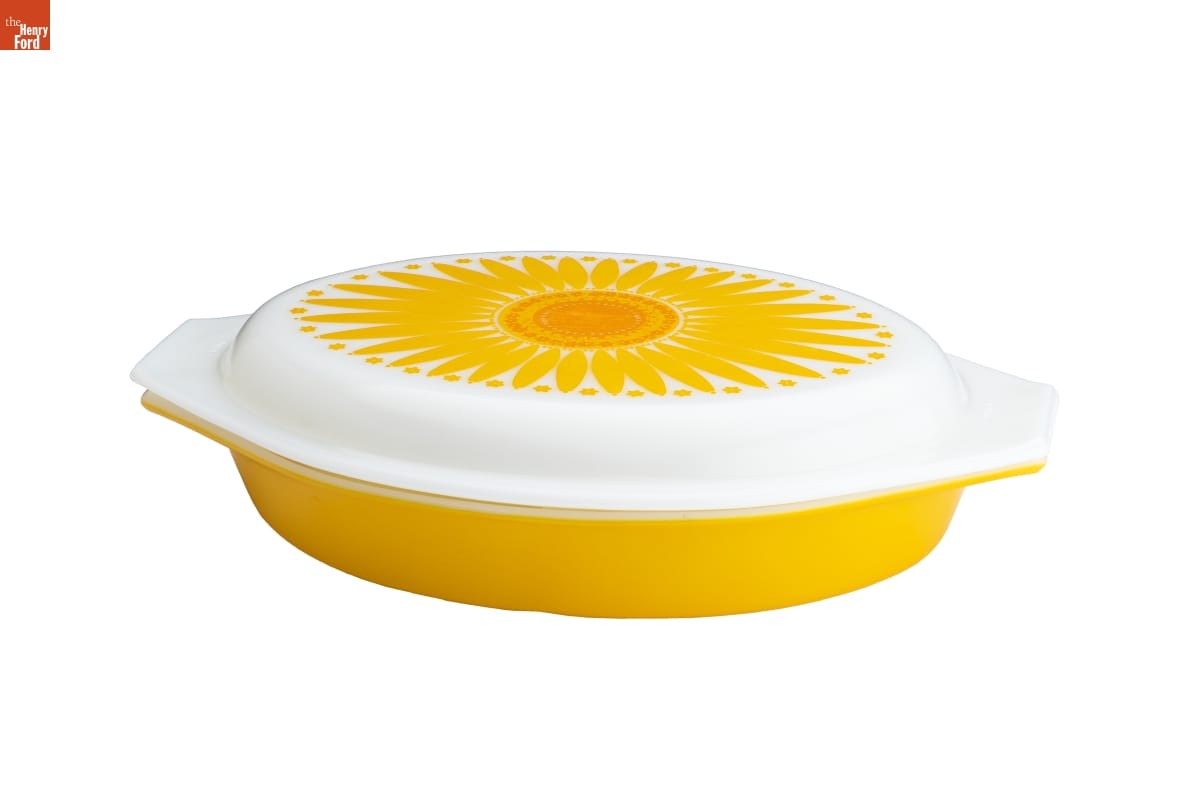
- Pyrex Casserole Dish, 1972-1973 - Corning Glass Works' heat-resistant glass bakeware, called Pyrex, was introduced in the mid-1910s. Pyrex products were inexpensive, with an easy-to-clean smooth surface. Pyrex glassware could travel from freezer to oven to table. Colored Pyrex kitchenware was introduced in 1947. Corning introduced its Daisy pattern with its bright and cheerful sunburst colors in 1968. It was discontinued five years later.
- 1972-1973
- Collections - Artifact
Pyrex Casserole Dish, 1972-1973
Corning Glass Works' heat-resistant glass bakeware, called Pyrex, was introduced in the mid-1910s. Pyrex products were inexpensive, with an easy-to-clean smooth surface. Pyrex glassware could travel from freezer to oven to table. Colored Pyrex kitchenware was introduced in 1947. Corning introduced its Daisy pattern with its bright and cheerful sunburst colors in 1968. It was discontinued five years later.
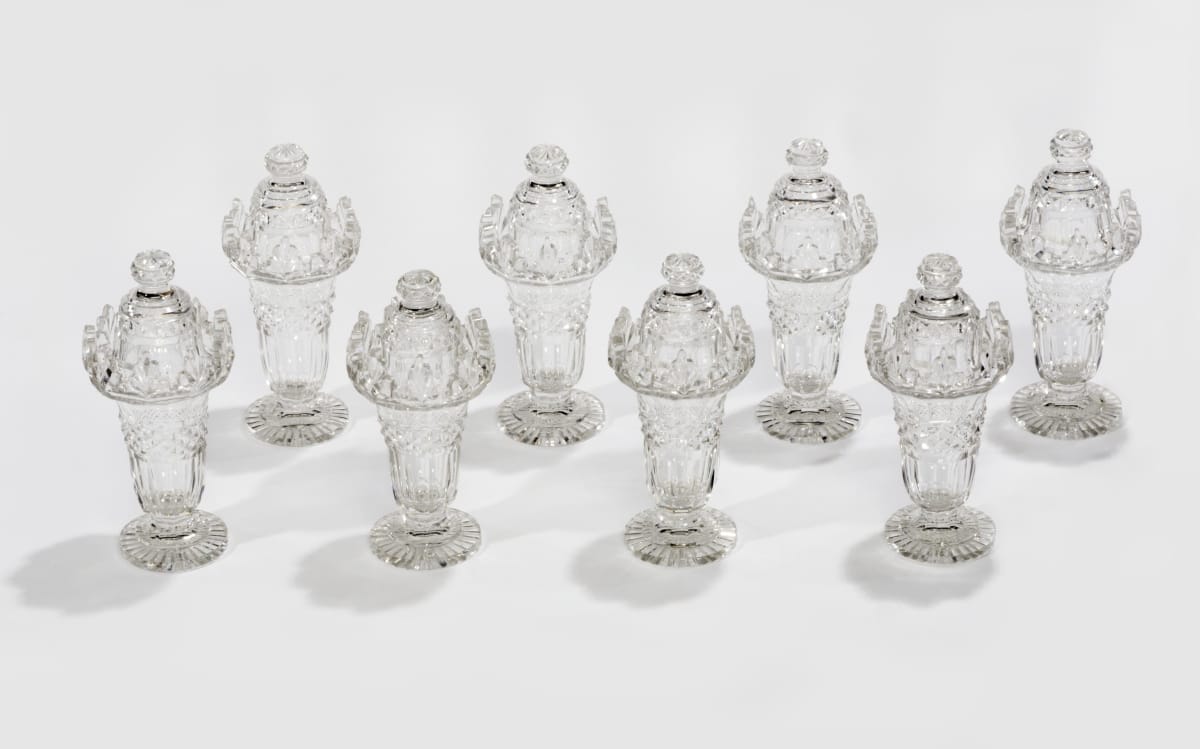
- Custard Cups, 1790-1810 - In the early 18th century, glassmakers in England and Ireland created exquisite translucent cut glassware known as Anglo-Irish glass. Beginning in the 1780s, Anglo-Irish glassmakers found a ready market in America -- now independent from Britain. Americans loved the dazzling interplay of candlelight and glass in their homes, which showed that Americans could attain interiors as fashionable as those in London.
- 1790-1810
- Collections - Artifact
Custard Cups, 1790-1810
In the early 18th century, glassmakers in England and Ireland created exquisite translucent cut glassware known as Anglo-Irish glass. Beginning in the 1780s, Anglo-Irish glassmakers found a ready market in America -- now independent from Britain. Americans loved the dazzling interplay of candlelight and glass in their homes, which showed that Americans could attain interiors as fashionable as those in London.