
Search
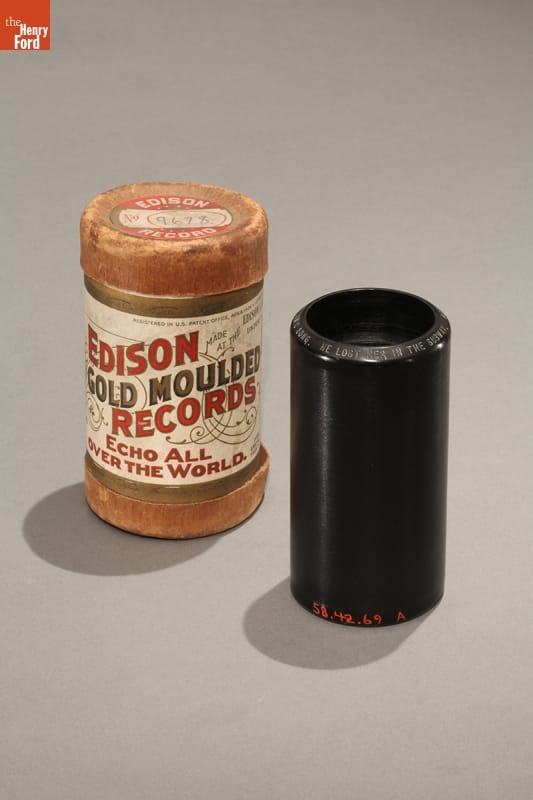
- Edison Gold Moulded Cylinder Record, "He Lost Her in the Subway," 1907 - Ada Jones was the first female popular singer to have a career making records. Her popular song recordings were largely humorous ones wherein she demonstrated her skill at using dialects. In this song, "the train began to swerve, we went around a curve" and 14 men fell into her lap! She found a man she liked more than her brand new husband!
- 1907
- Collections - Artifact
Edison Gold Moulded Cylinder Record, "He Lost Her in the Subway," 1907
Ada Jones was the first female popular singer to have a career making records. Her popular song recordings were largely humorous ones wherein she demonstrated her skill at using dialects. In this song, "the train began to swerve, we went around a curve" and 14 men fell into her lap! She found a man she liked more than her brand new husband!
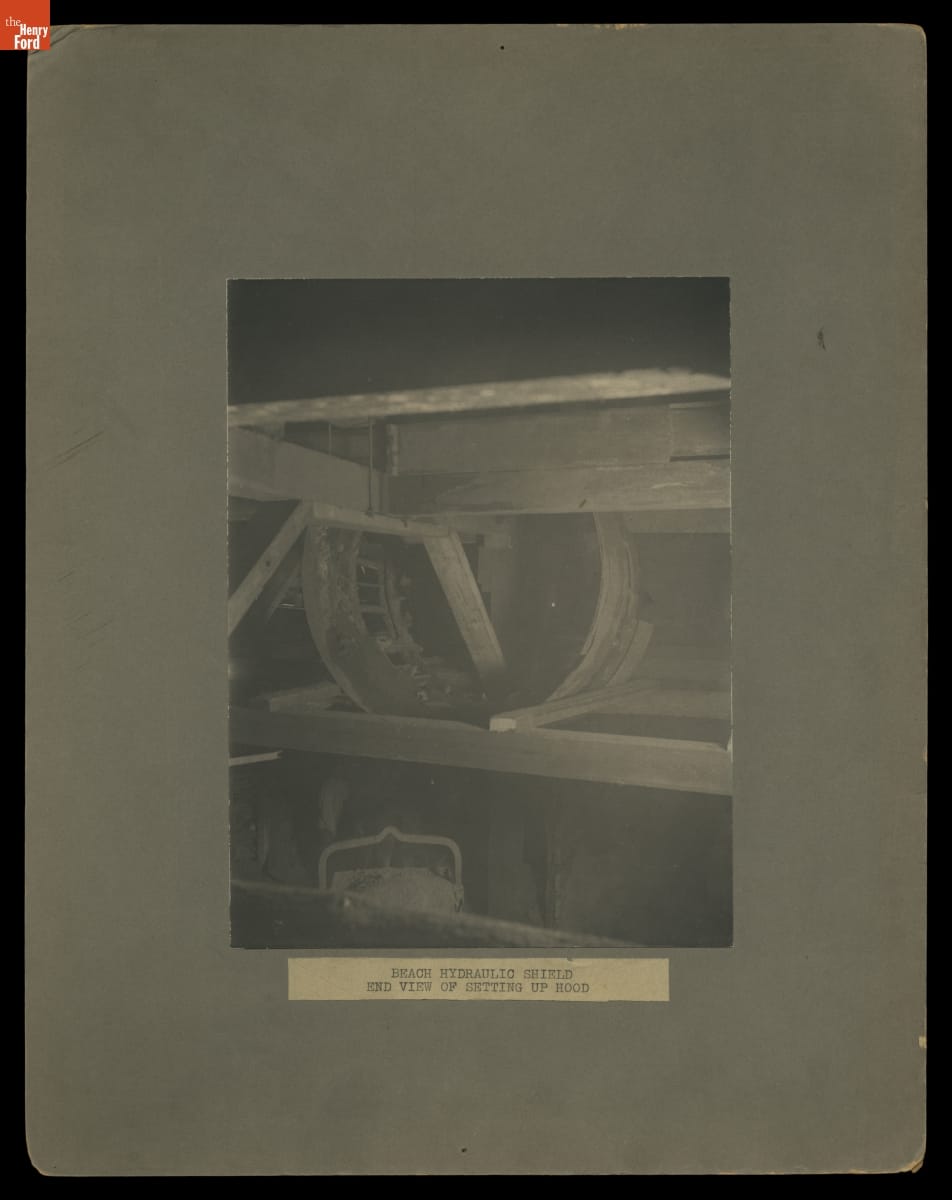
- Beach Hydraulic Shield in the Pneumatic Transit Tunnel, 1912 - Alfred Ely Beach (1826-1896), American inventor and publisher, constructed New York City’s first subway. The 312-foot-long experiment, constructed in 1870, ran under Broadway, with a single station near city hall. Beach also devised a cylindrical tunneling shield to protect workers as they dug the tunnel. Pneumatic power propelled the subway’s cars. The line was abandoned in 1873.
- 1912
- Collections - Artifact
Beach Hydraulic Shield in the Pneumatic Transit Tunnel, 1912
Alfred Ely Beach (1826-1896), American inventor and publisher, constructed New York City’s first subway. The 312-foot-long experiment, constructed in 1870, ran under Broadway, with a single station near city hall. Beach also devised a cylindrical tunneling shield to protect workers as they dug the tunnel. Pneumatic power propelled the subway’s cars. The line was abandoned in 1873.
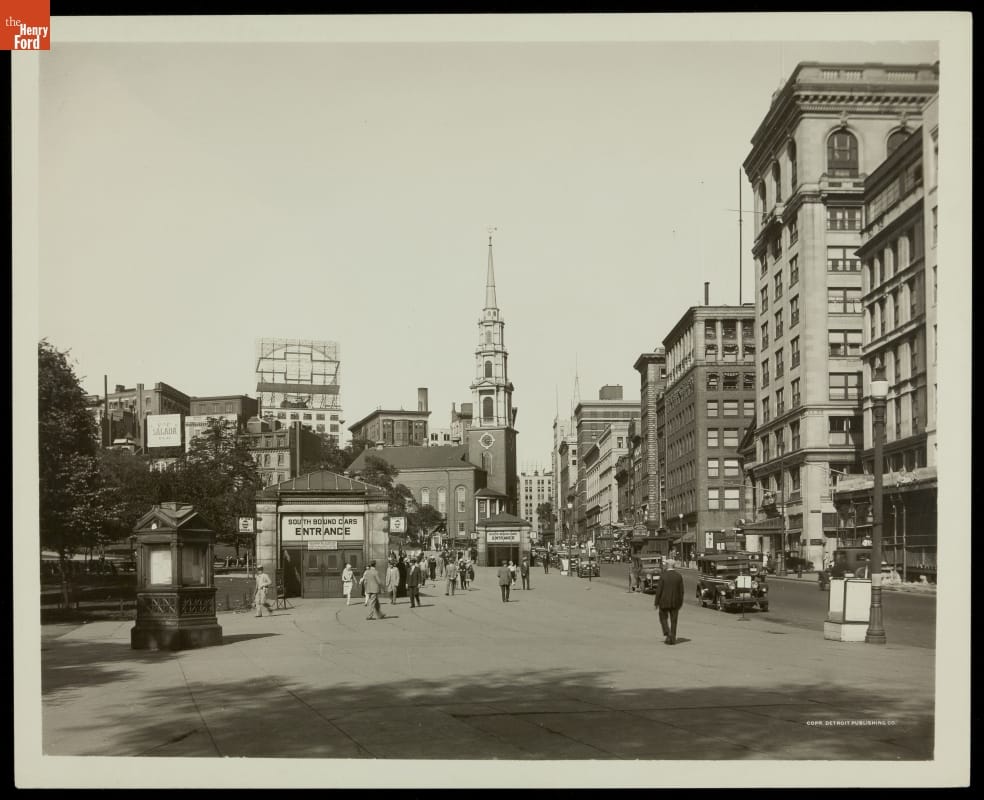
- Tremont Street Mall, Boston, Massachusetts, circa 1925 - As one of the world's major image publishers from 1895 to 1924, the Detroit Publishing Company had a wide-ranging stock of original photographs. This view of Boston's Tremont Street Mall centers on the steeple of Park Street Church. To the left is Boston Common, the oldest public park in the United States (dating from 1634).
- circa 1925
- Collections - Artifact
Tremont Street Mall, Boston, Massachusetts, circa 1925
As one of the world's major image publishers from 1895 to 1924, the Detroit Publishing Company had a wide-ranging stock of original photographs. This view of Boston's Tremont Street Mall centers on the steeple of Park Street Church. To the left is Boston Common, the oldest public park in the United States (dating from 1634).
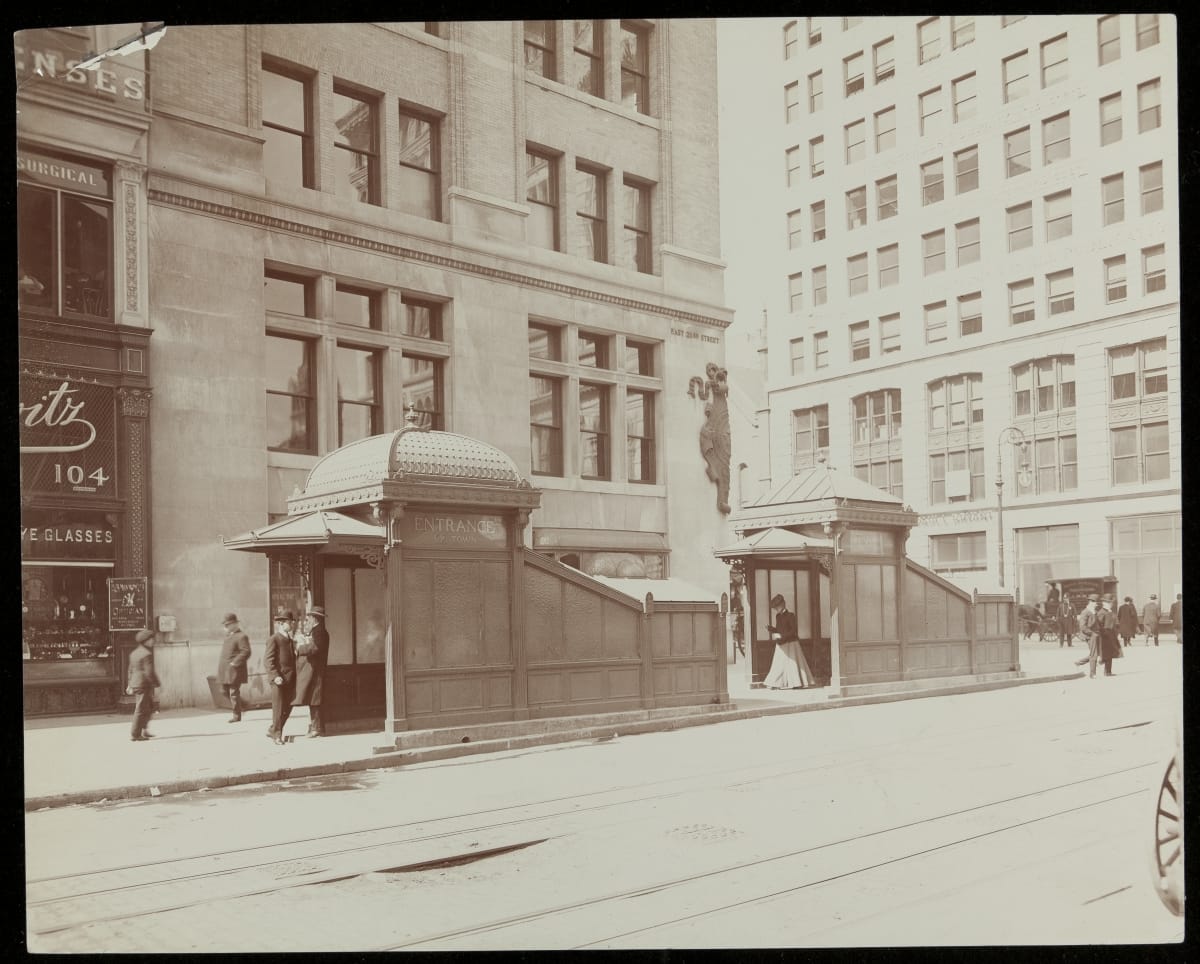
- Subway Entrance and Exit Kiosks, 23rd and 4th Avenues, New York City, circa 1905 - As one of the world's major image publishers from 1895 to 1924, the Detroit Publishing Company had a wide-ranging stock of original photographs. Here, people enter and exit a New York City subway station operated by the Interborough Rapid Transit Company. The city's Board of Transportation acquired the company in 1940.
- circa 1905
- Collections - Artifact
Subway Entrance and Exit Kiosks, 23rd and 4th Avenues, New York City, circa 1905
As one of the world's major image publishers from 1895 to 1924, the Detroit Publishing Company had a wide-ranging stock of original photographs. Here, people enter and exit a New York City subway station operated by the Interborough Rapid Transit Company. The city's Board of Transportation acquired the company in 1940.
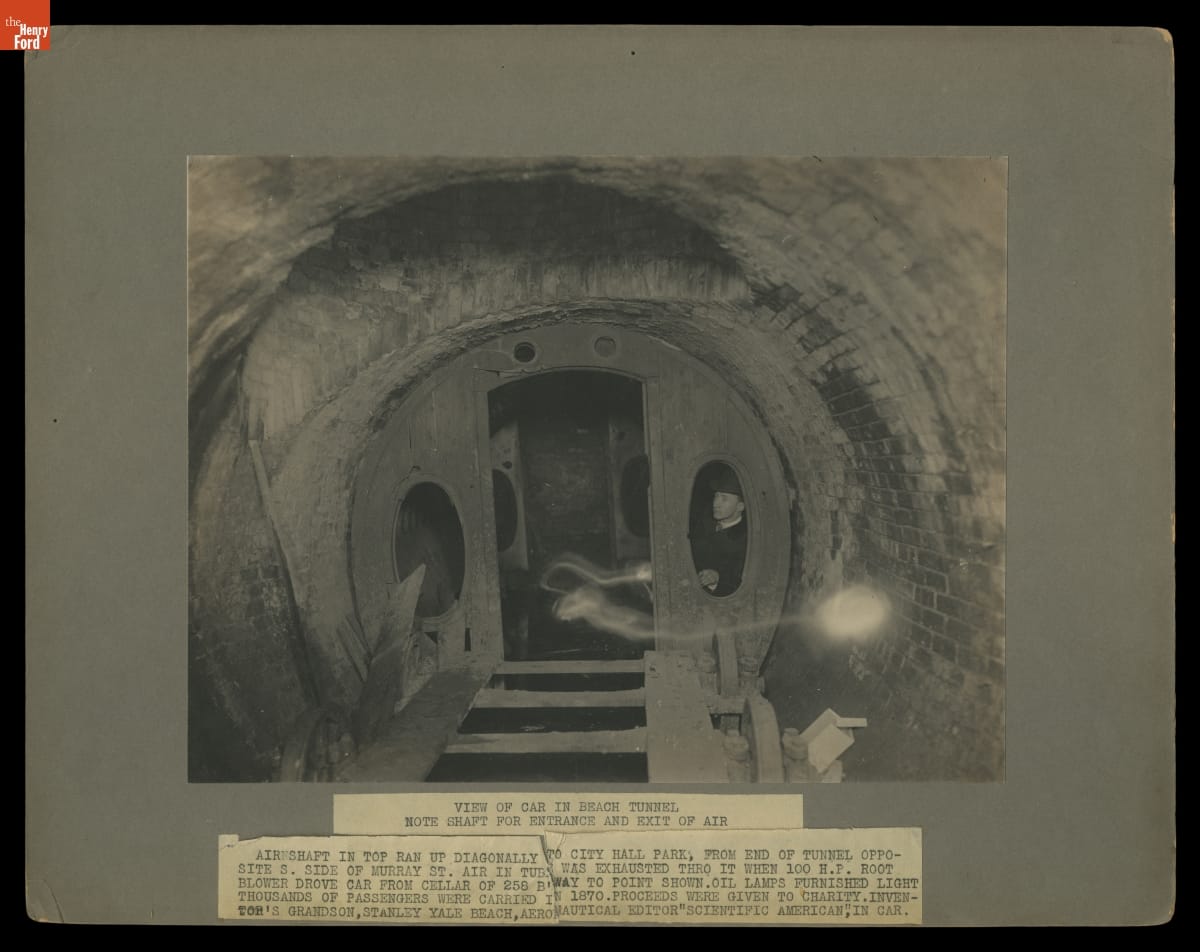
- The Beach Pneumatic Transit Tunnel Showing Stanley Yale Beach in Passenger Car, 1899 - Alfred Ely Beach (1826-1896), American inventor and publisher, constructed New York City’s first subway. The 312-foot-long experiment, constructed in 1870, ran under Broadway, with a single station near city hall. Beach also devised a cylindrical tunneling shield to protect workers as they dug the tunnel. Pneumatic power propelled the subway’s cars. The line was abandoned in 1873.
- 1899
- Collections - Artifact
The Beach Pneumatic Transit Tunnel Showing Stanley Yale Beach in Passenger Car, 1899
Alfred Ely Beach (1826-1896), American inventor and publisher, constructed New York City’s first subway. The 312-foot-long experiment, constructed in 1870, ran under Broadway, with a single station near city hall. Beach also devised a cylindrical tunneling shield to protect workers as they dug the tunnel. Pneumatic power propelled the subway’s cars. The line was abandoned in 1873.
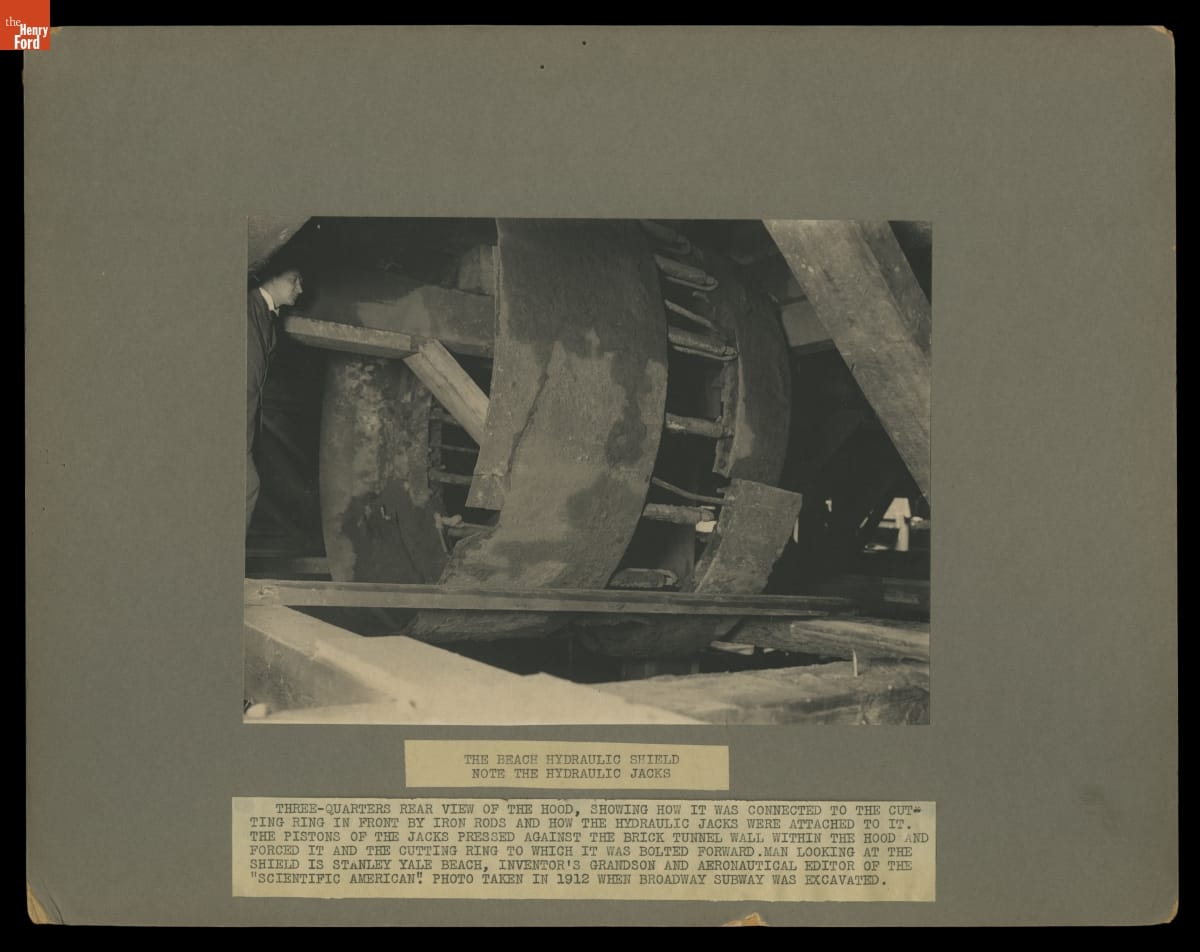
- The Beach Hydraulic Cutting Shield in the Beach Pneumatic Transit Tunnel, 1912 - Alfred Ely Beach (1826-1896), American inventor and publisher, constructed New York City’s first subway. The 312-foot-long experiment, constructed in 1870, ran under Broadway, with a single station near city hall. Beach also devised a cylindrical tunneling shield to protect workers as they dug the tunnel. Pneumatic power propelled the subway’s cars. The line was abandoned in 1873.
- 1912
- Collections - Artifact
The Beach Hydraulic Cutting Shield in the Beach Pneumatic Transit Tunnel, 1912
Alfred Ely Beach (1826-1896), American inventor and publisher, constructed New York City’s first subway. The 312-foot-long experiment, constructed in 1870, ran under Broadway, with a single station near city hall. Beach also devised a cylindrical tunneling shield to protect workers as they dug the tunnel. Pneumatic power propelled the subway’s cars. The line was abandoned in 1873.
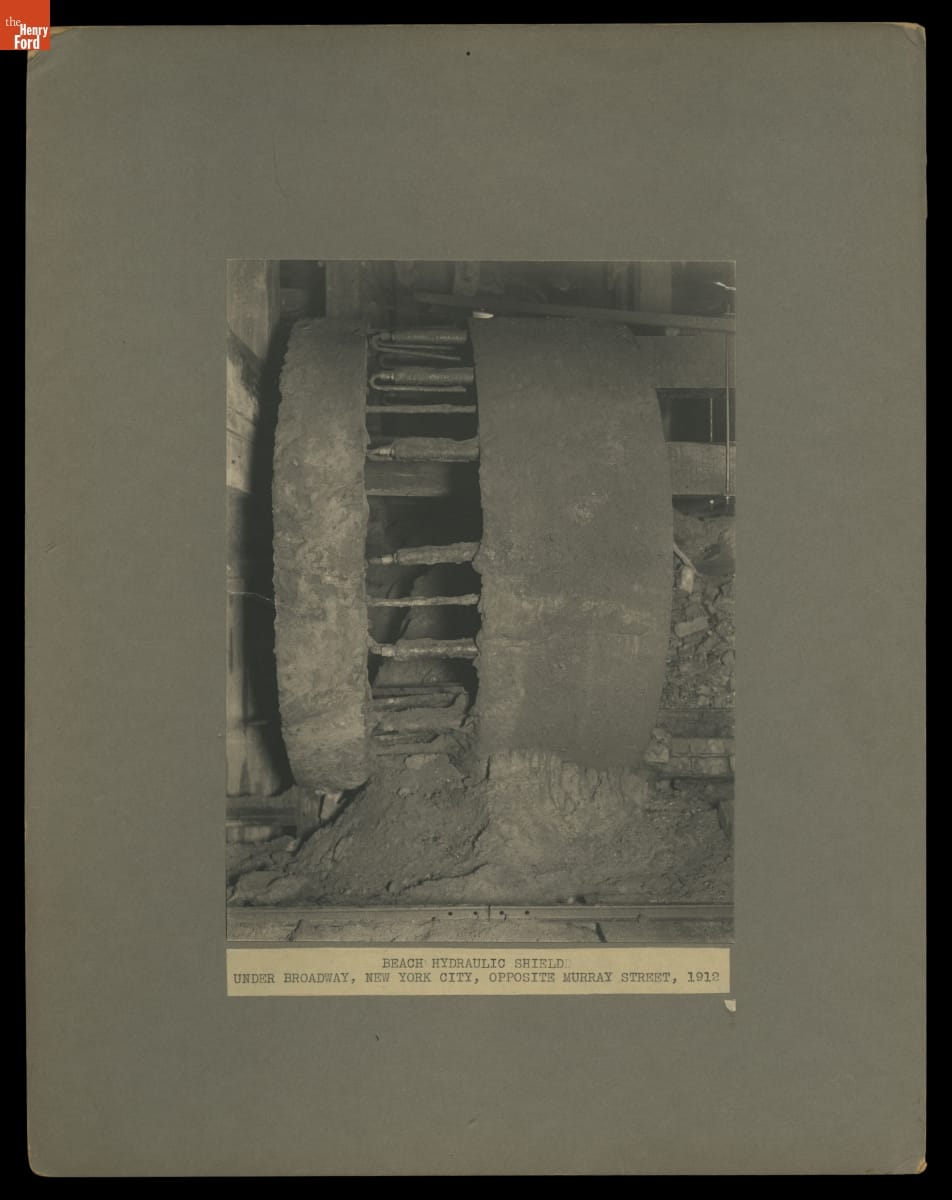
- The Beach Hydraulic Shield in the Pneumatic Transit Tunnel, 1912 - Alfred Ely Beach (1826-1896), American inventor and publisher, constructed New York City’s first subway. The 312-foot-long experiment, constructed in 1870, ran under Broadway, with a single station near city hall. Beach also devised a cylindrical tunneling shield to protect workers as they dug the tunnel. Pneumatic power propelled the subway’s cars. The line was abandoned in 1873.
- 1912
- Collections - Artifact
The Beach Hydraulic Shield in the Pneumatic Transit Tunnel, 1912
Alfred Ely Beach (1826-1896), American inventor and publisher, constructed New York City’s first subway. The 312-foot-long experiment, constructed in 1870, ran under Broadway, with a single station near city hall. Beach also devised a cylindrical tunneling shield to protect workers as they dug the tunnel. Pneumatic power propelled the subway’s cars. The line was abandoned in 1873.
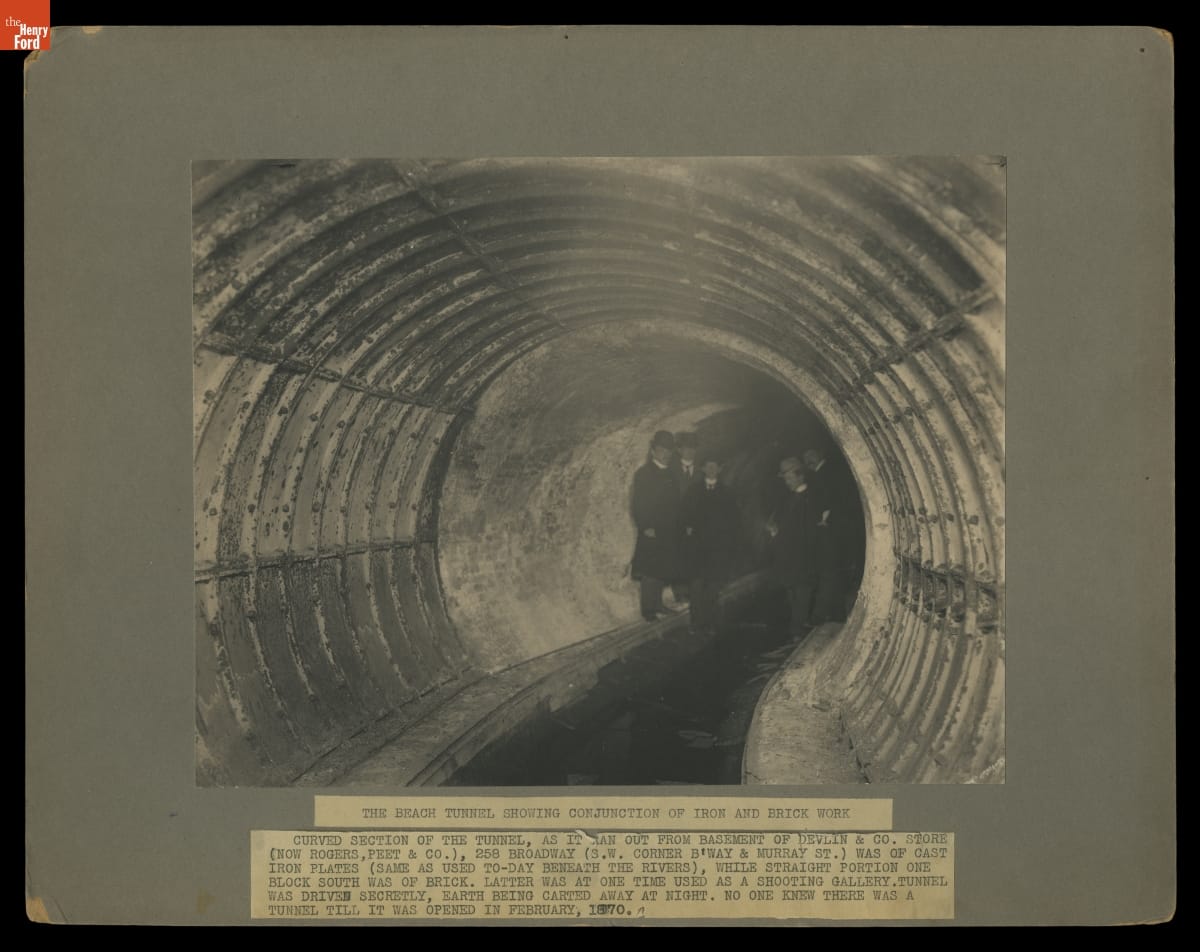
- The 1870 Beach Pneumatic Transit Tunnel Showing the Conjunction of Iron and Brick Work, 1899 - Alfred Ely Beach (1826-1896), American inventor and publisher, constructed New York City’s first subway. The 312-foot-long experiment, constructed in 1870, ran under Broadway, with a single station near city hall. Beach also devised a cylindrical tunneling shield to protect workers as they dug the tunnel. Pneumatic power propelled the subway’s cars. The line was abandoned in 1873.
- 1899
- Collections - Artifact
The 1870 Beach Pneumatic Transit Tunnel Showing the Conjunction of Iron and Brick Work, 1899
Alfred Ely Beach (1826-1896), American inventor and publisher, constructed New York City’s first subway. The 312-foot-long experiment, constructed in 1870, ran under Broadway, with a single station near city hall. Beach also devised a cylindrical tunneling shield to protect workers as they dug the tunnel. Pneumatic power propelled the subway’s cars. The line was abandoned in 1873.
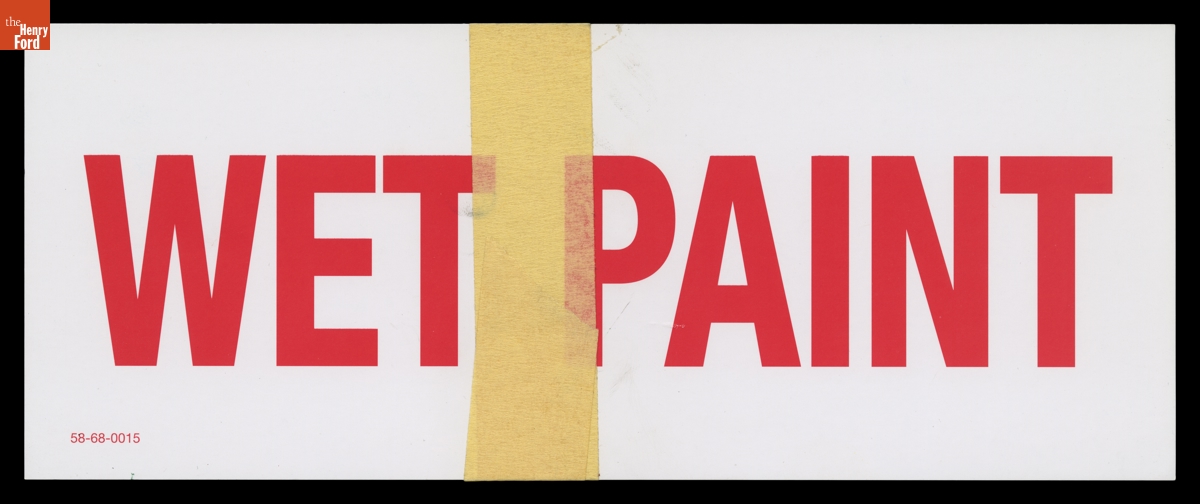
- NYC Metropolitan Transportation Authority "Wet Paint" Subway Sign - Jason Polan was a Michigan-born, New York-based illustrator whose visual storytelling sought to elevate the everyday—with humor and care. This collection documents Polan's life and prolific art practice, spanning childhood to adulthood; he was also a convener of creative communities. Inspiration, ideation, and completed projects are represented in preparatory material, printed matter, publications, product design, artwork, and personal collecting.
- circa 2008
- Collections - Artifact
NYC Metropolitan Transportation Authority "Wet Paint" Subway Sign
Jason Polan was a Michigan-born, New York-based illustrator whose visual storytelling sought to elevate the everyday—with humor and care. This collection documents Polan's life and prolific art practice, spanning childhood to adulthood; he was also a convener of creative communities. Inspiration, ideation, and completed projects are represented in preparatory material, printed matter, publications, product design, artwork, and personal collecting.
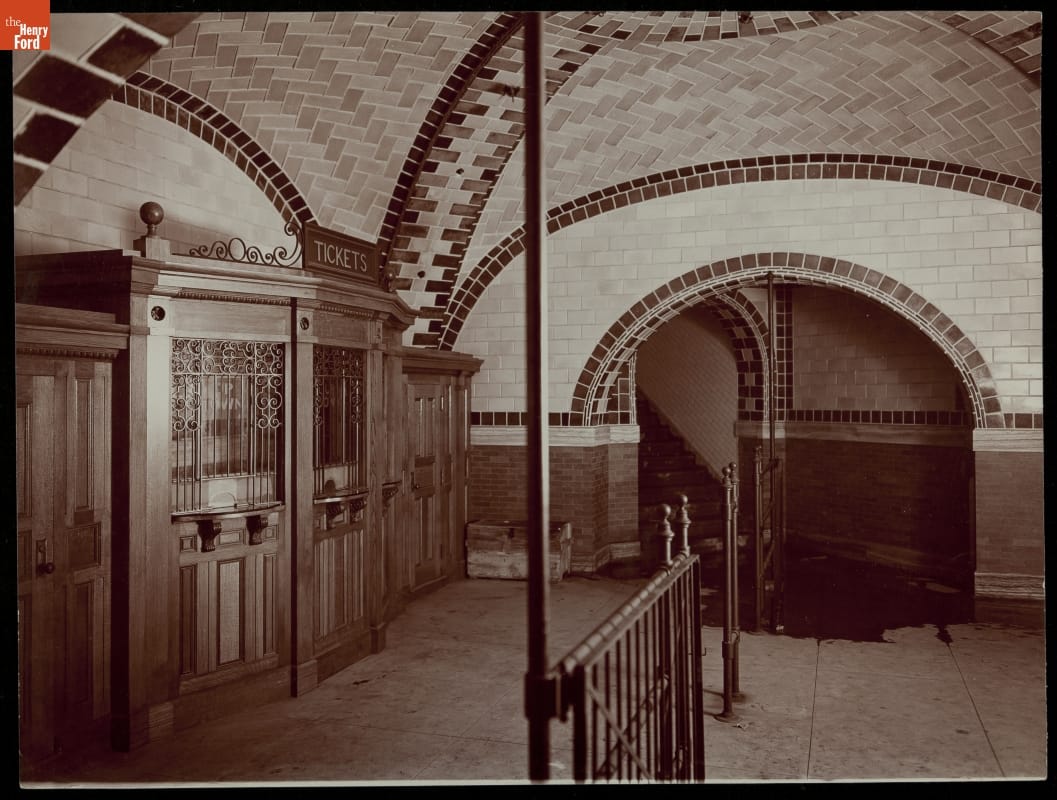
- Ticket Office inside City Hall Subway Station, New York City, circa 1910 - When it was built in the early twentieth century, New York City's subway was a modern, elegant transportation system. This photograph shows the tiled, vaulted ceiling over the ticket office at the City Hall subway station.
- circa 1910
- Collections - Artifact
Ticket Office inside City Hall Subway Station, New York City, circa 1910
When it was built in the early twentieth century, New York City's subway was a modern, elegant transportation system. This photograph shows the tiled, vaulted ceiling over the ticket office at the City Hall subway station.